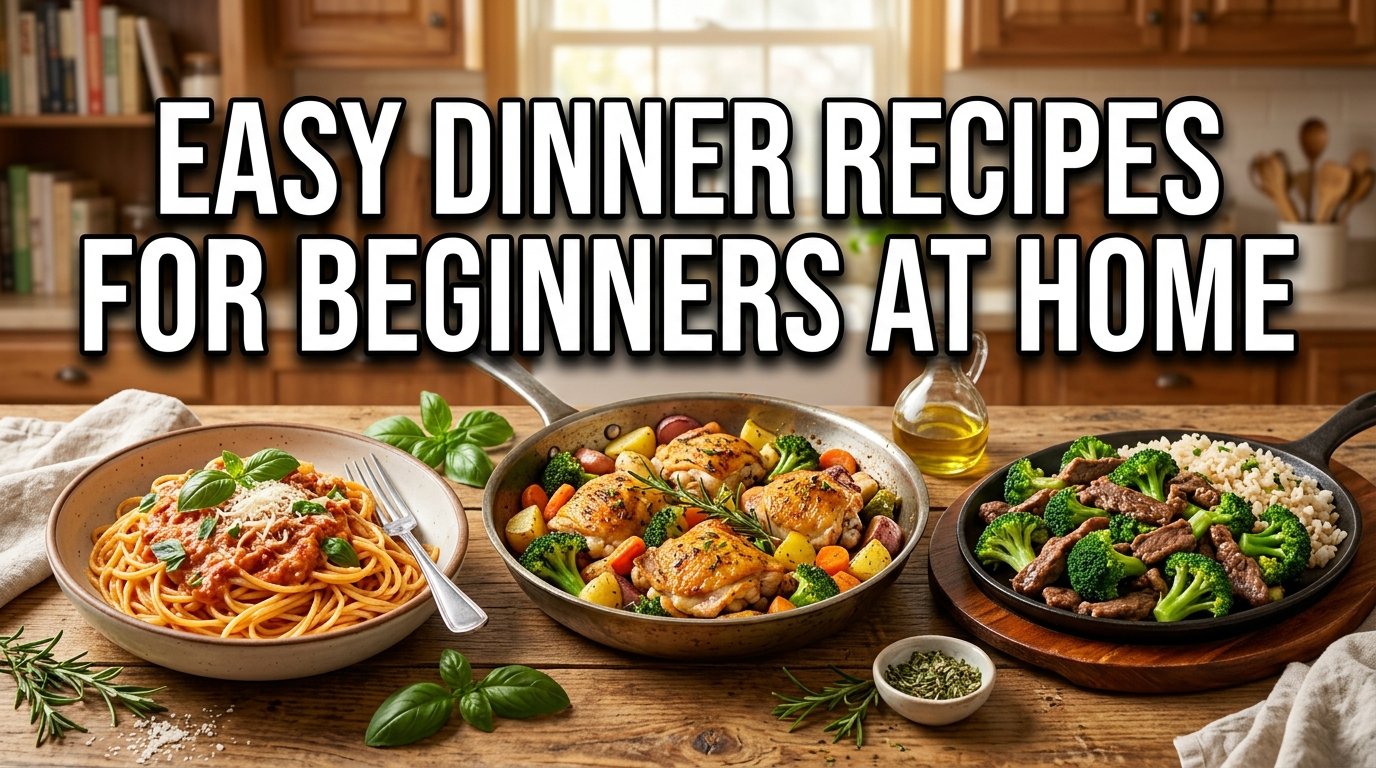
I burned spaghetti the first time I tried to cook dinner. Not the sauce. The actual noodles. I left them in a dry pot on high heat while I searched for a colander. The smoke alarm went off. My roommate came home to a kitchen that smelled like a campfire and a very defeated me holding a charred saucepan.
If you are standing in your kitchen right now, hungry, a little nervous, and staring at a bag of rice like it might bite you, I get it. That moment is the whole reason this guide exists. I have spent 15 years writing about food for people who do not know a sauté pan from a stockpot. I have tested these recipes on actual beginners. Not cooks. Friends who once asked me if olive oil goes in the fridge. They all ate well.
This is not a cooking class. It is a collection of the lowest-risk, highest-reward dinners you can make tonight with ordinary grocery store ingredients and the stuff already in your cabinets. I will tell you which tools matter, which pantry items buy you time, and which mistakes you do not need to repeat. And I will do it without pretending you have a sous vide machine or any idea what “sweating an onion” means.
Also Read: Basic Cooking Skills for New Home Cooks
What Makes a Dinner Recipe Beginner-Friendly
A beginner-friendly dinner recipe checks three boxes. First, it uses seven ingredients or fewer, not counting salt, pepper, and oil. Second, it relies on a single cooking method. You are not searing, then braising, then reducing a sauce while something else boils over. Third, it gives clear visual cues instead of strict time estimates. “Cook until the chicken is no longer pink in the middle” beats “cook exactly 7 minutes” every time because your stove is not the same as mine.
That is the framework. If a recipe does not meet those three rules, I left it out.
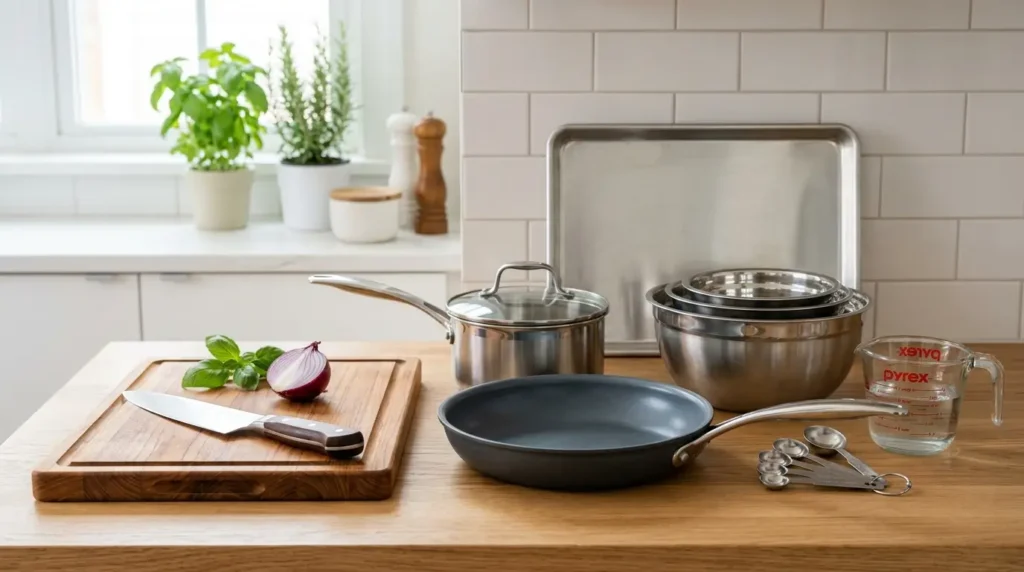
The Only 7 Tools You Need
I wish someone had told me this earlier: you do not need a kitchen full of gadgets. You need a handful of reliable basics. Here is the list I gave my sister when she moved into her first apartment.
-
10-inch nonstick skillet: This pan handles eggs, stir-fries, chicken breasts, and even quick pasta sauces. Nothing sticks, cleanup takes seconds. I use the T-fal Professional series because it costs $30 and lasts.
-
8-inch chef’s knife: One good knife for chopping, slicing, and mincing. Victorinox Fibrox is $40 and stays sharp. Do not buy a 12-piece block set. You will use two knives at most.
-
Large cutting board: Wood or plastic, at least 15 by 20 inches. More room means less mess on your counter.
-
Rimmed sheet pan: For roasting vegetables, chicken, sausage, and fish. Nordic Ware half-sheet pans are $15 and almost indestructible.
-
3-quart saucepan with lid: For rice, boiled eggs, soups, and heating canned beans. Farberware makes a classic one for $20.
-
Mixing bowls: One large, one medium. Stainless steel. That is all.
-
Measuring spoons and a liquid measuring cup: Do not eyeball baking soda, salt, or water until you know what a teaspoon looks like in your palm.
Total cost for everything: around $130 if you buy new. Less if you grab a couple pieces from a thrift store. A beginner cooking class in a decent city costs more than that.
Pantry Items That Mean Dinner Is Always 20 Minutes Away
I keep these ten things in my kitchen at all times. On nights when I am too tired to think, I grab three or four of them and a protein, and I have a meal.
-
Olive oil
-
Kosher salt and a pepper grinder
-
Garlic (fresh or a jar of minced)
-
Canned diced tomatoes
-
Dried spaghetti or penne
-
Long-grain white rice
-
Chicken broth or bouillon cubes
-
Yellow onion
-
Eggs
-
Frozen mixed vegetables (peas, carrots, corn, green beans)
Frozen vegetables are a lifeline. They do not rot in the crisper drawer while you work late, and they go straight from freezer to pan. I add them to pasta, stir-fries, and soups with zero guilt.
Also Read: Basic Cooking Skills for New Home Cooks
Foolproof Beginner Dinner Recipes
I organized these by the kind of night you are having. Some evenings you have 15 minutes and exactly zero patience. Others you can turn on the oven and let it do the work. Pick the section that matches your energy.
Quick Wins Under 20 Minutes
-
Spaghetti with Garlic, Olive Oil, and Parsley
Boil pasta. While it cooks, warm 3 tablespoons olive oil in your skillet over medium-low heat. Add 3 sliced garlic cloves. Let them sizzle gently until fragrant, maybe 2 minutes. Toss with drained pasta, a handful of chopped parsley, and a pinch of red pepper flakes. My friend Mark made this three times the first week he moved out of his parents’ place. He felt like a chef. It costs about $3 total. -
Ground Beef Tacos
Brown a pound of ground beef in your skillet over medium heat. Break it up with a spatula. Add a packet of taco seasoning and a splash of water. Simmer 5 minutes. Warm tortillas in the microwave, open a jar of salsa, and grab pre-shredded lettuce. Dinner in 12 minutes flat. -
Cheesy Scrambled Egg Wraps
Beat 3 eggs with a splash of milk. Melt butter in your nonstick skillet over medium-low heat. Pour in eggs, stir gently with a spatula until soft curds form. Sprinkle shredded cheese on top, let it melt, and slide everything onto a flour tortilla. Add baby spinach if you have it. This saved me many times when the fridge looked empty. -
Tuna and White Bean Salad
Drain a can of tuna and a can of cannellini beans. Toss with olive oil, lemon juice, halved cherry tomatoes, and a little basil. Serve with crusty bread. No stove required. I make this on hot nights when I refuse to turn on the oven. -
Speedy Ramen Upgrade
Throw away the seasoning packet. Boil the noodles in chicken broth with a handful of frozen stir-fry vegetables. Crack an egg into the pot in the last 2 minutes and let it poach. A bowl of this costs under $2 and tastes like you put in effort.
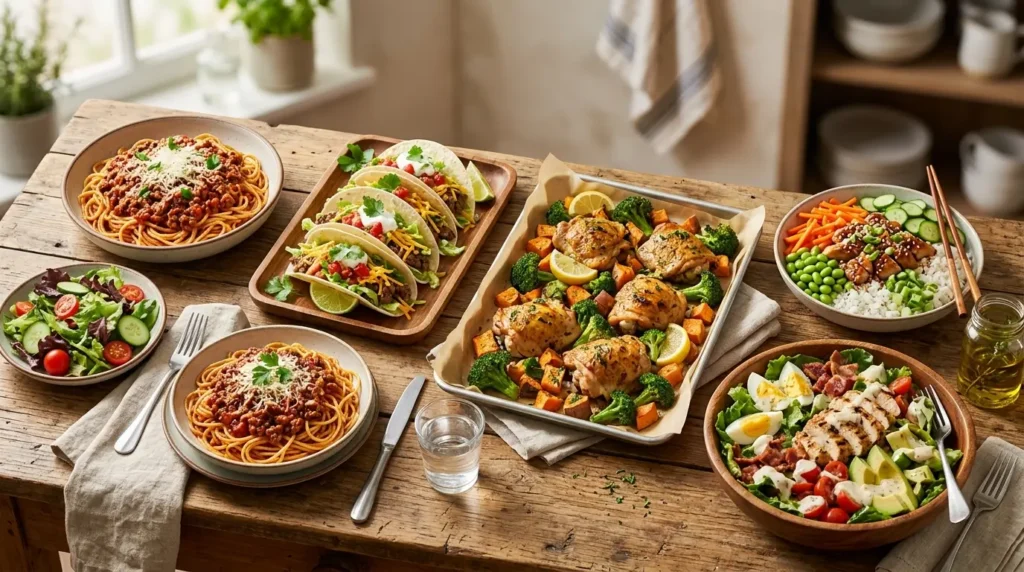
One-Pot and Sheet Pan Meals
-
One-Pot Creamy Tomato Pasta
Sauté a diced onion and 2 minced garlic cloves in a deep skillet. Add a can of crushed tomatoes, 2 cups chicken broth, and 8 ounces uncooked pasta. Simmer until the pasta absorbs most of the liquid and becomes tender, about 12 minutes. Stir in a splash of heavy cream or a knob of cream cheese. One dirty pan, dinner for four. -
Sheet Pan Lemon Herb Chicken and Potatoes
Cube 2 chicken breasts and 3 Yukon gold potatoes. Toss with olive oil, lemon juice, dried rosemary, salt, and pepper on a sheet pan. Spread everything flat. Roast at 425°F for 25 minutes. The chicken juices run clear when done. Add frozen green beans during the last 8 minutes. -
Sausage and Pepper Foil Packets
Slice smoked sausage, one bell pepper, and half an onion. Divide between two large pieces of foil. Drizzle with oil and Italian seasoning. Seal the edges and bake at 400°F for 20 minutes. No pans to wash. -
Skillet Chili Mac
Brown ground beef, then stir in canned kidney beans, diced tomatoes, chili powder, and uncooked elbow macaroni. Add enough water to cover, simmer until the pasta is tender. Top with shredded cheddar. This tastes like a hug. -
No-Drain Rice and Chicken Bake
Put 4 chicken thighs in a baking dish. Add a cup of uncooked rice, a can of cream of mushroom soup, and 1.5 cups of water. Cover with foil. Bake at 375°F for 45 minutes. The rice cooks in the liquid and the chicken stays juicy.
Dinner Bowls You Can’t Mess Up
-
Beginner Sushi Bowl
Cook sushi rice or short-grain rice. Top with imitation crab sticks, sliced cucumber, avocado, and a drizzle of soy sauce mixed with a little mayo. No rolling mat, no stress. I ate this for a week straight when I was learning about Japanese food. -
Mediterranean Chickpea Bowl
Combine canned chickpeas, diced cucumber, halved cherry tomatoes, crumbled feta, and a few olives. Dressing is lemon juice, olive oil, salt, and pepper. Ten minutes, no heat, high protein. -
Teriyaki Salmon Rice Bowl
Place a salmon fillet on a foil-lined pan, brush with bottled teriyaki sauce, broil 8 minutes. Serve over rice with steamed frozen edamame. Salmon is done when it flakes with a fork. -
Black Bean and Corn Burrito Bowl
Warm a can of black beans and a cup of frozen corn. Pile on rice, add salsa, diced avocado, and a squeeze of lime. If you have sour cream, add a dollop. This got my brother through college. -
Rotisserie Chicken Noodle Soup
Pull meat from a store-bought rotisserie chicken. Simmer with chicken broth, sliced carrots, celery, and egg noodles. The whole thing takes 20 minutes and makes the house smell like you’ve been cooking all day.
How to Pick the Right Recipe Tonight
Ask yourself three questions.
-
How much time do I really have? If the answer is under 20 minutes, stick to the Quick Wins.
-
What is my energy level? If you can barely stand, pick a Sheet Pan meal where the oven does the work.
-
What protein is already in my fridge? Ground beef, eggs, chicken thighs, canned tuna. Start there and scroll the list until something matches.
I keep a printed copy of this recipe list taped inside a cabinet door. The decision fatigue that hits at 6 p.m. is real. A pre-made shortlist removes the mental load.
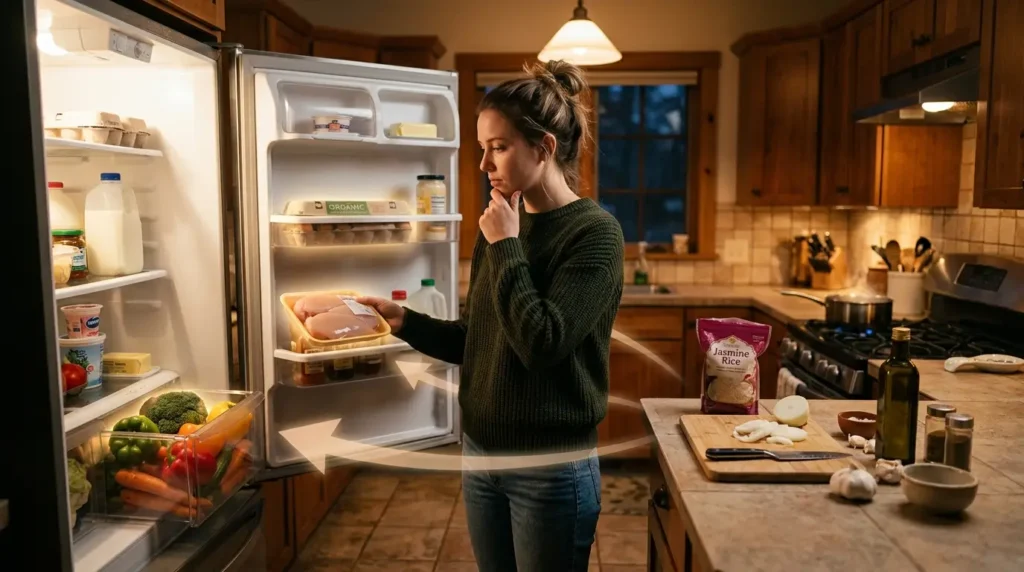
Step-by-Step: Your First Dinner From Start to Finish
-
Pick a recipe from the Quick Wins list. Tacos or spaghetti.
-
Read the whole thing twice before you touch a pan. I am serious.
-
Pull every ingredient and tool onto the counter. Mise en place just means “put in place.” It stops that frantic search for the garlic while the oil smokes.
-
Preheat your pan over medium heat. Do not crank it to high.
-
Follow each step without checking your phone. Set a timer if the recipe gives a time.
-
Taste the food before you plate it. Does it need salt? A squeeze of lemon? Adjust.
-
If you cooked meat, let it rest on a cutting board for 5 minutes. Juices redistribute instead of flooding the plate.
-
Sit down and eat. Do not scroll. Notice what worked. The pride will surprise you.
The Mistakes I Made So You Don’t Have To
Overcrowding the pan. I once dumped a pound of chicken into a small skillet. It steamed gray instead of browning. Cook in batches if needed. Leave space.
Not tasting while I cooked. I served completely unsalted chili to guests once. Now I dip a spoon in at every stage. You cannot fix what you do not taste.
Using high heat for everything. High heat burns garlic in seconds and leaves chicken raw inside. Medium heat is your default. Only go high to boil water.
Skipping the timer. I ruined a batch of rice because I got distracted by a phone call. Set a timer for every step, even if the recipe only lists one.
Trying something complicated on a Tuesday. After a long day, you have about 10% of your brainpower available. A 12-ingredient curry is not the move. Pick the simplest thing you are excited to eat.
Meal Kits vs. Cooking From Scratch
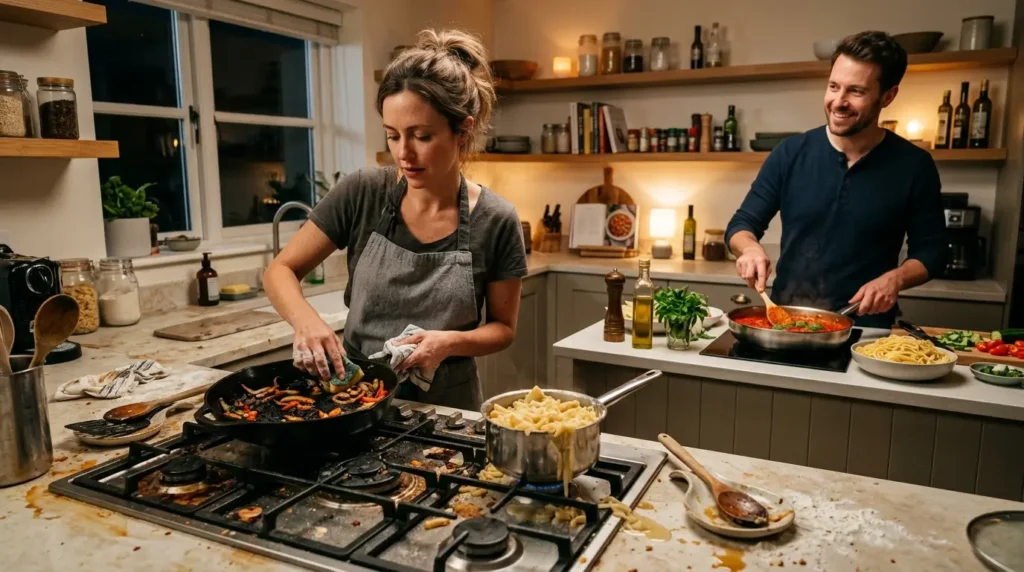
Meal kits like HelloFresh and Blue Apron send you pre-portioned ingredients and glossy recipe cards. I used them for six weeks when I moved to a new city and did not know where the grocery store was.
They teach you basic techniques: searing, roasting, making a pan sauce. The portioning means less food waste. But they cost $8 to $12 per serving, and the packaging waste is absurd.
Cooking from scratch costs $2 to $5 per serving once you have a pantry. You learn to shop, to substitute, to trust your instincts. You also risk buying a jar of tahini for one recipe and never using it again.
My honest take: if you have never cooked anything, a 3-week meal kit subscription is a solid crash course. Then cancel it, take the recipe cards you liked, and go buy the ingredients yourself. You will save money and cook with more freedom.
How to Find Help in Your Area
Sometimes you want a real person to show you how to hold a knife. Search “cooking classes for beginners near me” or check community colleges and local kitchen stores. Sur La Table runs $59–$89 intro classes. Public libraries sometimes host free workshops.
Grocery delivery changes the game for busy beginners. Walmart, Kroger, and regional chains offer pickup or delivery for $4 to $10. You can build a cart on your phone and avoid the after-work chaos. In big cities, you can also find meal prep services that sell pre-chopped vegetables and marinated proteins. They cost more but shave 15 minutes off your prep time.
Check your farmers market for produce that is actually fresh. A simple tomato salad tastes like a different dish when the tomatoes came out of the ground that morning. Many markets have vendors who will tell you how to cook what they sell. I learned to roast beets from a farmer in Portland who handed me a photocopied recipe.
Building Confidence That Lasts
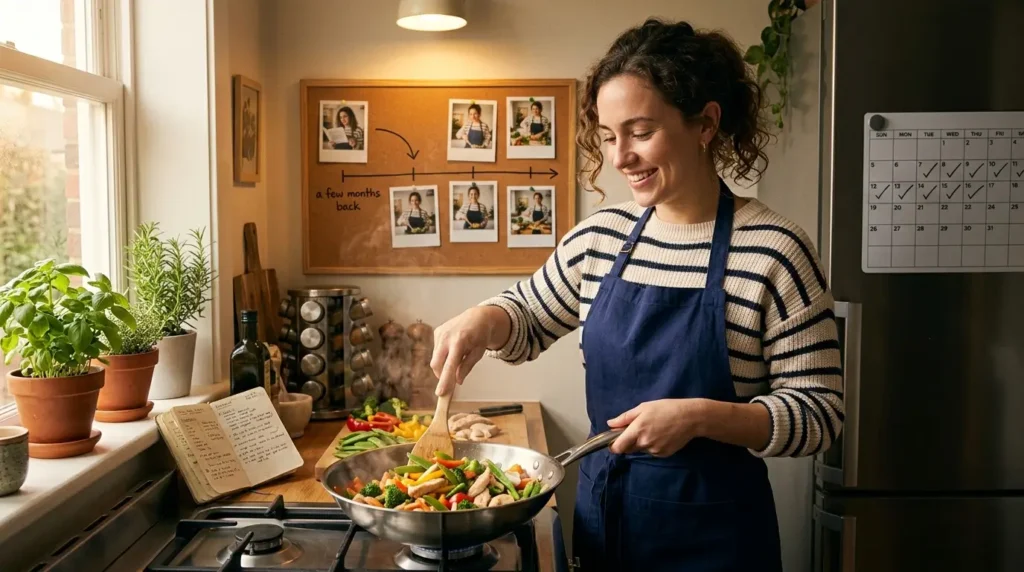
My friend Kara started cooking a year ago. She made spaghetti aglio e olio every Monday for a month until it felt boring, then she added sautéed shrimp one week, then cherry tomatoes the next. That is how you build a skill. You repeat something until your hands know it, then you change one variable.
Do not chase variety at first. Chase familiarity. When a recipe stops scaring you, that is a win. Frame it. The next recipe will be easier.
Keep a note on your phone of meals you liked. I have a running list called “Dinners That Worked.” When I am stuck, I scroll it and pick one. It removes the mental paralysis of “What do I even like?”
Accept that you will mess up. I have set a skillet on fire, shattered a glass lid, and served raw-on-the-inside chicken. Every mistake taught me something that no recipe blog ever mentioned. The goal is not a perfect kitchen. It is a kitchen you are not afraid to walk into.
Cooking Terms That Sound Fancy (But Are Not)
-
Mise en place: Put everything in its place before you start. Chop, measure, set out. No scrambling.
-
Al dente: Pasta cooked until it still has a slight firm bite. Not mushy.
-
Deglaze: Pour a little liquid into a hot pan after cooking meat to lift up the brown stuck-on bits. That is the start of a pan sauce.
-
Sauté: Cook quickly in a small amount of oil over medium-high heat while stirring.
-
Simmer: Small bubbles gently breaking the surface. Not a rolling boil.
Safety Stuff Worth Remembering
Chicken needs to reach an internal temperature of 165°F. Ground beef needs 160°F. I bought a $12 digital meat thermometer and stopped guessing. No more cutting into a chicken breast to see if the middle is pink.
Wash your hands after touching raw meat. Use a separate cutting board for chicken if you have one. I just wash mine with hot soapy water immediately.
Keep your fingers curled under when chopping. The knuckle guides the knife. I learned that the hard way after a trip to urgent care. A sharp knife is safer than a dull one because it does not slip.
Frequently Asked Questions
What is the absolute easiest dinner for someone who has never cooked?
Spaghetti with butter, garlic, and Parmesan. Boil pasta, melt butter with minced garlic in your skillet, toss together. Add salt and pepper. Three ingredients, no knife skills required.
How can a beginner cook dinner every night without burning out?
Do not try a new recipe every night. Rotate three or four meals you already know. Keep pantry staples stocked so you can improvise. Meal kits can fill the gaps in the early weeks.
Which kitchen tool should I buy first?
A 10-inch nonstick skillet and an 8-inch chef’s knife. Together they handle 90% of beginner recipes. Buy the rest slowly.
Are frozen vegetables okay to use?
Yes. They are flash-frozen at peak ripeness, often more nutritious than fresh produce that sat in transit. They work great in soups, stir-fries, and sheet pan meals.
What is the biggest mistake beginners make?
Using high heat and walking away from the stove. Most food cooks best on medium heat. Stay nearby, set timers, and you will stop burning things.
How do I know when chicken is done?
Use a meat thermometer. 165°F in the thickest part. If you do not have one, cut into the thickest piece. The juices should run clear, not pink.
Can I learn to cook using just YouTube?
Yes. Channels like Basics with Babish, Pro Home Cooks, and Ethan Chlebowski break down beginner techniques. Watch a recipe once, then cook along the second time.
Do I need to meal prep on Sundays?
Not at first. Start by washing and chopping vegetables after you get home from the store. That small habit cuts 10 minutes off your weeknight dinner time.
Are meal kits cheaper than eating out?
Yes, almost always. They cost $8–$12 per serving. A restaurant meal costs $15–$25. Cooking from scratch is still the cheapest option at $2–$5 a plate.
What is the easiest way to add flavor without cooking skills?
Salt, acid, and fat. Salt the dish properly. Finish with a squeeze of lemon or a splash of vinegar. Add a pat of butter or a drizzle of olive oil. That combination fixes 80% of bland food.
What To Do Tonight
Open your fridge. Look for one protein you need to use. Find the matching recipe in this list. Read it. Pull out your skillet. Cook it without interruption.
Write down what you made and how it turned out. Next week, pick one new recipe and add it to the rotation. That is how a cooking habit starts. Not with a grand plan. With a single hot meal eaten at your own table.
Leave a Reply