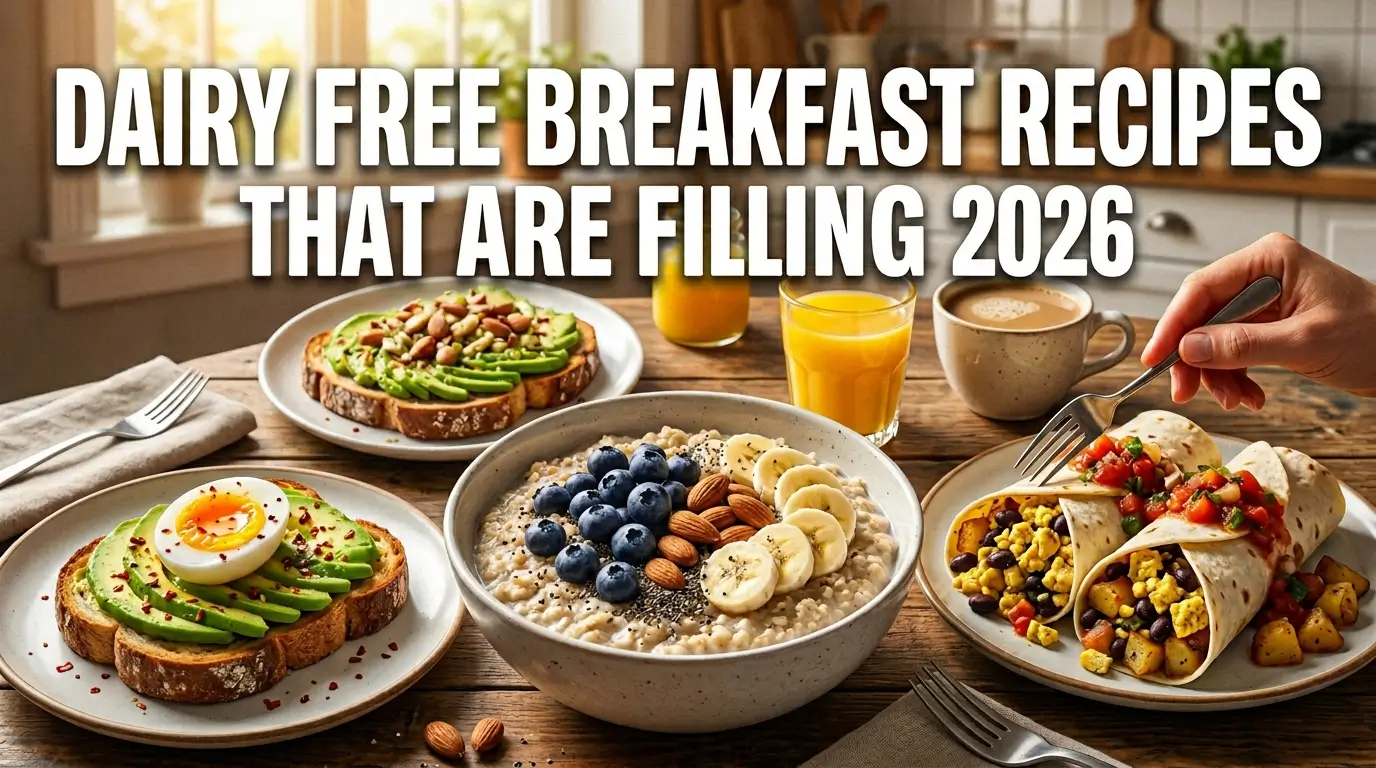
Dairy Free Breakfast Recipes That Are Filling
My first dairy-free breakfast was a smoothie with almond milk, a banana, and some spinach. I was starving by 10 a.m. and raided the office snack drawer. I thought cutting out dairy meant I’d just have to accept being hungry. I was wrong. I didn’t have a dairy problem. I had a protein and fat problem.
A filling dairy-free breakfast isn’t hard to make. You just have to stop treating plant-based milks like a direct swap for cow’s milk. When you understand the satiety formula and stock your kitchen with a few high-protein staples, you’ll eat breakfast at 7 and forget about food until noon. This isn’t a list of sad, dry toast and black coffee. These are real meals that taste good and actually hold you.
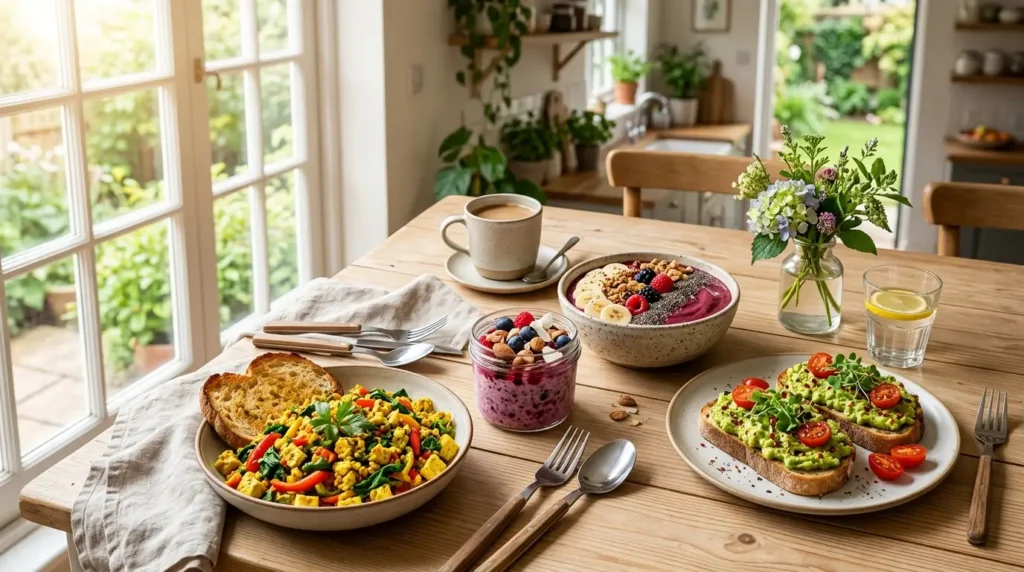
The Satiety Formula That Makes Dairy-Free Breakfasts Work
Hunger isn’t just about an empty stomach. It’s hormonal. Ghrelin, the hunger hormone, rises when your stomach is empty and drops when you eat enough protein and fiber. Fat triggers cholecystokinin (CCK), which tells your brain to stop eating. Protein also has the highest thermic effect of food, meaning your body burns more calories just digesting it. A breakfast that keeps you full needs to hit all three: protein, fiber, and healthy fats.
When you remove dairy, you remove a convenient source of all three. Milk has 8 grams of protein per cup. Greek yogurt packs 15 to 20 grams. Most plant-based milks have almost no protein. Almond milk has 1 gram. Oat milk has 3. Coconut yogurt often has zero. So a dairy-free breakfast built on a smoothie with almond milk and fruit is a blood sugar spike waiting to crash.
The fix is simple. Every dairy-free breakfast should deliver at least 20 grams of protein, 5 grams of fiber, and a source of healthy fat. I use this framework as a checklist, not a strict recipe. It works whether I’m scrambling tofu, blending a smoothie, or making pancakes.
High-Protein Dairy-Free Breakfasts That Taste Like Real Food
Tofu Scramble with Veggies
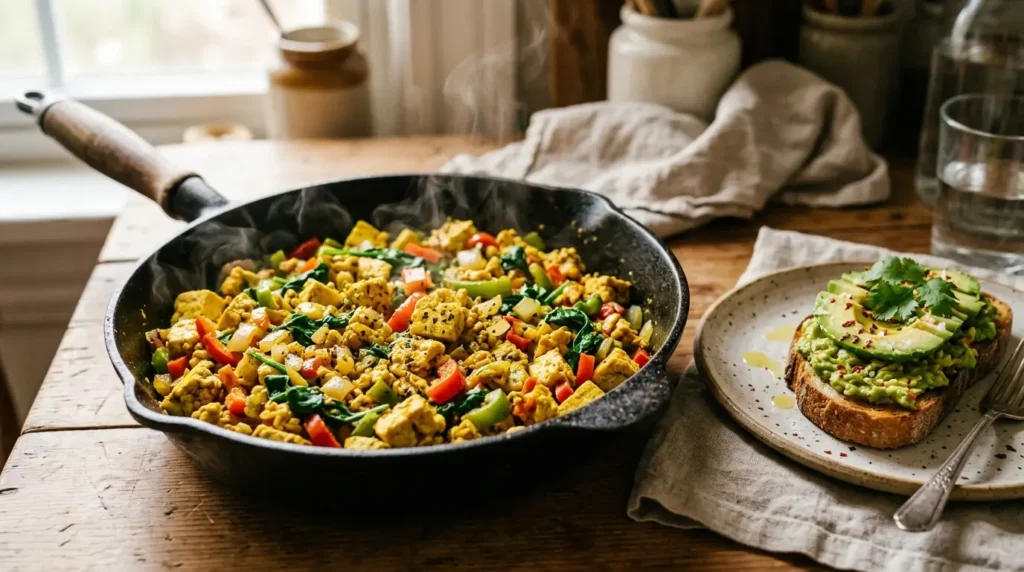
I used to hate tofu. It tasted like wet nothing. Then I learned to press it, crumble it, and cook it with turmeric, black salt (kala namak), and whatever vegetables are in the fridge. Half a block of extra-firm tofu gives you about 20 grams of protein. Add a handful of spinach, bell peppers, and onions sautéed in olive oil. Serve it with a slice of whole-grain toast and half an avocado. The whole plate has close to 25 grams of protein, 8 grams of fiber, and enough fat from the avocado to trigger CCK.
Chickpea Flour Omelet
Chickpea flour (also called besan) is a pantry hero. Mix half a cup with half a cup of water, a pinch of baking powder, salt, and spices. Pour it into a hot, oiled skillet and fill it with mushrooms, tomatoes, and dairy-free pesto. Fold and cook until firm. One omelet has about 10 grams of protein and 5 grams of fiber. I eat it with a side of turkey sausage or a handful of hemp seeds for extra protein.
Egg Muffin Cups for Meal Prep
Eggs are dairy-free. I repeat: eggs are not dairy. They come from chickens, not cows. Eight eggs whisked with chopped broccoli, diced ham or turkey sausage, and a little salt and pepper poured into a greased muffin tin and baked at 375°F for 18 minutes makes 10 egg cups. Two egg cups give me 16 grams of protein. I make a dozen on Sunday and reheat them in 45 seconds all week.
High-Protein Overnight Oats
Oats are a blank canvas. I use half a cup of rolled oats, a tablespoon of chia seeds, a scoop of pea protein powder (20 grams of protein), and three-quarters of a cup of unsweetened soy milk. Stir it, let it sit overnight, and top with a tablespoon of almond butter in the morning. That bowl has about 30 grams of protein and 12 grams of fiber. It tastes like a peanut butter and jelly sandwich in oat form if you add frozen berries.
Smoothies That Won’t Leave You Hungry
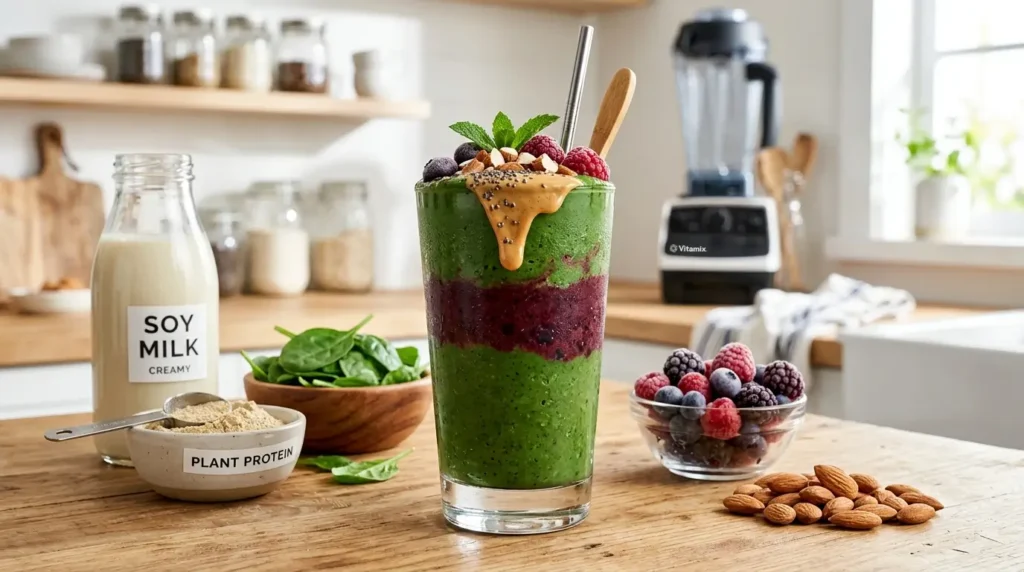
A smoothie is only as filling as what you put in it. I use a template: 1 cup unsweetened soy milk or pea milk (Ripple has 8 grams of protein per cup), 1 scoop of vegan protein powder (Vega Sport or Orgain give me 20 to 30 grams), a tablespoon of flax or chia seeds, a handful of spinach, half a cup of frozen berries, and a tablespoon of almond butter. Blend it and you have a 35-gram protein smoothie with 10 grams of fiber. It takes three minutes. I drink it on the drive to work and don’t think about food until lunch.
Pancakes and Waffles Without the Mid-Morning Crash
I missed pancakes. So I started making them with oats, banana, and eggs. Blend 1 cup of rolled oats, 1 ripe banana, 2 eggs, a teaspoon of baking powder, and a splash of oat milk until smooth. Cook on a non-stick skillet. Two large pancakes give me 22 grams of protein. I top them with fresh fruit and a drizzle of tahini instead of butter.
For waffles, I use almond flour. Mix 2 cups almond flour, 4 eggs, a quarter cup of melted coconut oil, a tablespoon of maple syrup, and baking soda. Cook in a waffle iron. These freeze well. I pop one in the toaster on busy mornings.
How to Choose a Non-Dairy Milk for Satiety
Not all plant milks are created equal. Here’s the quick guide I wish I had three years ago.
| Milk Type | Protein per Cup | Best For |
|---|---|---|
| Soy Milk (Silk) | 7–9g | Smoothies, oatmeal, baking |
| Pea Milk (Ripple) | 8g | High-protein smoothies, drinking |
| Oat Milk (Oatly) | 3g | Coffee, pancakes |
| Almond Milk | 1g | Low-calorie, but not satiating |
| Coconut Milk (carton) | 0g | Avoid as a primary milk |
If you want a filling breakfast, pick soy or pea milk as your base. Almond and coconut milk are flavored water for all practical purposes when it comes to protein.
Dairy-Free Yogurt That Actually Delivers
Coconut yogurt is dessert. It’s creamy and delicious, but it has maybe 1 gram of protein. I eat it for a treat, not for breakfast. For a filling parfait, I use a soy-based Greek-style yogurt. Silk makes one with 10 grams of protein per serving. Kite Hill’s almond milk Greek yogurt has about 5 grams. I layer it with granola and berries and sprinkle hemp hearts on top for extra protein and crunch. The yogurt aisle is full of imposters. Read the label. If it has less than 6 grams of protein, treat it as a snack, not a meal.
Savory Options That Go Beyond Oats
Some mornings I want salt, not sweet. A sweet potato breakfast taco hits that spot. I roast cubed sweet potatoes with smoked paprika and cumin, then stuff them into warm corn tortillas with black beans, sliced radish, and a sauce made from blended silken tofu, lime, and cilantro. Each taco has complex carbs, fiber, and about 12 grams of protein if I add extra beans.
Another go-to is a smashed chickpea and avocado wrap. Mash half a cup of chickpeas with a quarter of an avocado, lemon juice, and dill. Spread it on a whole-wheat wrap with cucumber and spinach. Chickpeas bring protein and resistant starch, which is good for your gut and keeps you full.
Meal Prep So Mornings Don’t Fall Apart
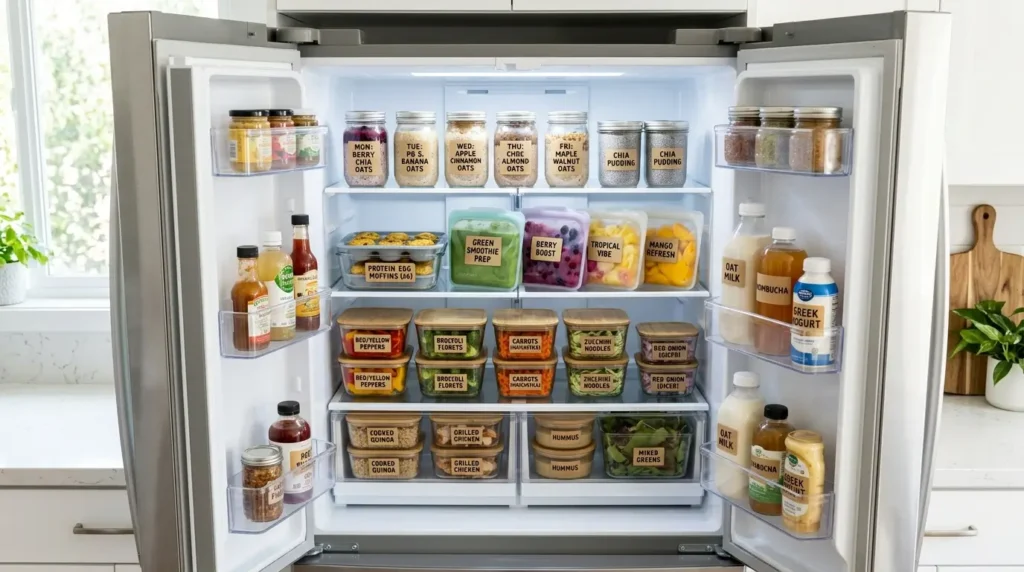
I know I won’t cook at 6 a.m. So I prep three things on Sunday: overnight oats jars for Monday through Thursday, egg muffin cups for grab-and-go, and smoothie packs. For smoothie packs, I portion frozen berries, spinach, protein powder, and flax seeds into freezer bags. In the morning, I dump a bag in the blender, add soy milk and nut butter, and blend. It’s faster than a drive-thru.
The fridge stays organized, and I don’t open the pantry and stare. Most cooked dairy-free breakfasts keep for 4 days. Egg cups and baked oatmeal freeze well. Pull them out the night before, and they’re ready by morning.
Eating Dairy-Free Breakfast Outside Your Kitchen
When I travel or meet someone for brunch, I search “dairy-free breakfast near me” or “vegan brunch [city].” Even in a diner, I can piece together a meal. I order eggs cooked in oil, not butter. I ask for avocado toast on whole-grain bread with a side of turkey sausage. Most places have oat or soy milk now. I ask for my latte with soy milk instead of almond milk to get a few extra grams of protein.
If you’re in a city with dedicated vegan cafes, you’ll find tofu scrambles, chickpea omelets, and dairy-free pancakes. Expect to pay $10 to $16 for a plated meal. Local meal prep kitchens sometimes offer dairy-free breakfast delivery. Search “dairy-free meal delivery [your city]” and check reviews for macro accuracy.
Also Read: Beginner Meal Prep Ideas for the Week 2026
Mistakes That Can Derail Your Morning
I made every one of these mistakes. Learn from my grumpy, hungry mornings.
- Picking the wrong milk. Almond and coconut milk won’t fill you up. Use soy or pea milk as a base.
- Forgetting the fat. A smoothie with just protein powder and fruit digests too fast. Add nut butter, avocado, or seeds.
- Trusting labels that say “dairy-free” but deliver no nutrition. A dairy-free muffin is still a muffin. Check the protein and fiber content.
- Not prepping. If you wake up with nothing ready, you’ll grab a banana and hope for the best. Prep on Sunday. It takes 90 minutes and saves your whole week.
- Assuming you’ll get enough calcium without dairy. Include fortified plant milks, tofu set with calcium sulfate, and leafy greens. If you’re cutting out dairy permanently, talk to a dietitian about vitamin D and B12.
A Note for People with Lactose Intolerance or Milk Allergy
About 65% of the world’s population has a reduced ability to digest lactose after infancy, according to the National Institutes of Health. That’s a lot of people silently dealing with bloating and discomfort. If you fall into that group, you already know dairy isn’t your friend. The good news is that a dairy-free breakfast doesn’t mean you’re doomed to hunger. You just need to build your plate with intention.
For those with a true milk allergy, cross-contamination matters. Check labels for casein and whey, which are milk proteins. Certified dairy-free products from brands like Enjoy Life or Made Good eliminate the guesswork.
A Simple Decision Framework
If you’re new to this, start here. Pick your protein: tofu, eggs, chickpea flour, or a plant-based protein powder. Add a fiber-rich carb: oats, quinoa, sweet potato, or whole-grain bread. Finish with a fat: avocado, nuts, seeds, or olive oil. Combine them in any format. Scramble, blend, bake, or toast. That’s the whole system. You don’t need a new recipe every day. You need a reliable template.
Frequently Asked Questions
What Can I Eat for Breakfast That’s Dairy Free and Filling?
Combine 20 grams of protein (tofu, eggs, pea protein powder), fiber (oats, whole grains, chia seeds), and healthy fat (avocado, nut butter). A tofu scramble with veggies and avocado toast is one example.
How Do I Get Enough Protein at Breakfast Without Dairy?
Use eggs, tofu, tempeh, chickpea flour, hemp seeds, chia seeds, and plant-based protein powders. Soy milk and pea milk add protein to smoothies and oats.
Are Eggs Dairy Free?
Yes. Eggs come from poultry, not from milk. They are safe for dairy-free diets unless you also avoid eggs for other reasons.
What Is the Best Non-Dairy Milk for Breakfast?
Soy milk and pea milk have the most protein (7–9 grams per cup). Oat milk is low in protein. Almond and coconut milk have almost none.
Can I Make Pancakes Without Milk and Still Feel Full?
Yes. Blend oats, banana, eggs, and baking powder for protein-rich pancakes. Use almond flour for waffles. Top with nut butter and fruit.
What Vegan Breakfast Keeps You Full the Longest?
A tofu scramble with avocado and whole-grain toast, or a smoothie with pea milk, protein powder, chia seeds, spinach, and almond butter. Both provide protein, fiber, and fat.
How Can I Make My Smoothie Filling Without Yogurt?
Add a scoop of vegan protein powder, a tablespoon of nut butter or flax seeds, and use soy or pea milk instead of almond milk. Include spinach or frozen cauliflower for fiber.
Is Peanut Butter Dairy Free?
Pure peanut butter is just peanuts and salt. Some brands add whey or milk powder, so check the label. Most natural peanut butter is safe.
Leave a Reply