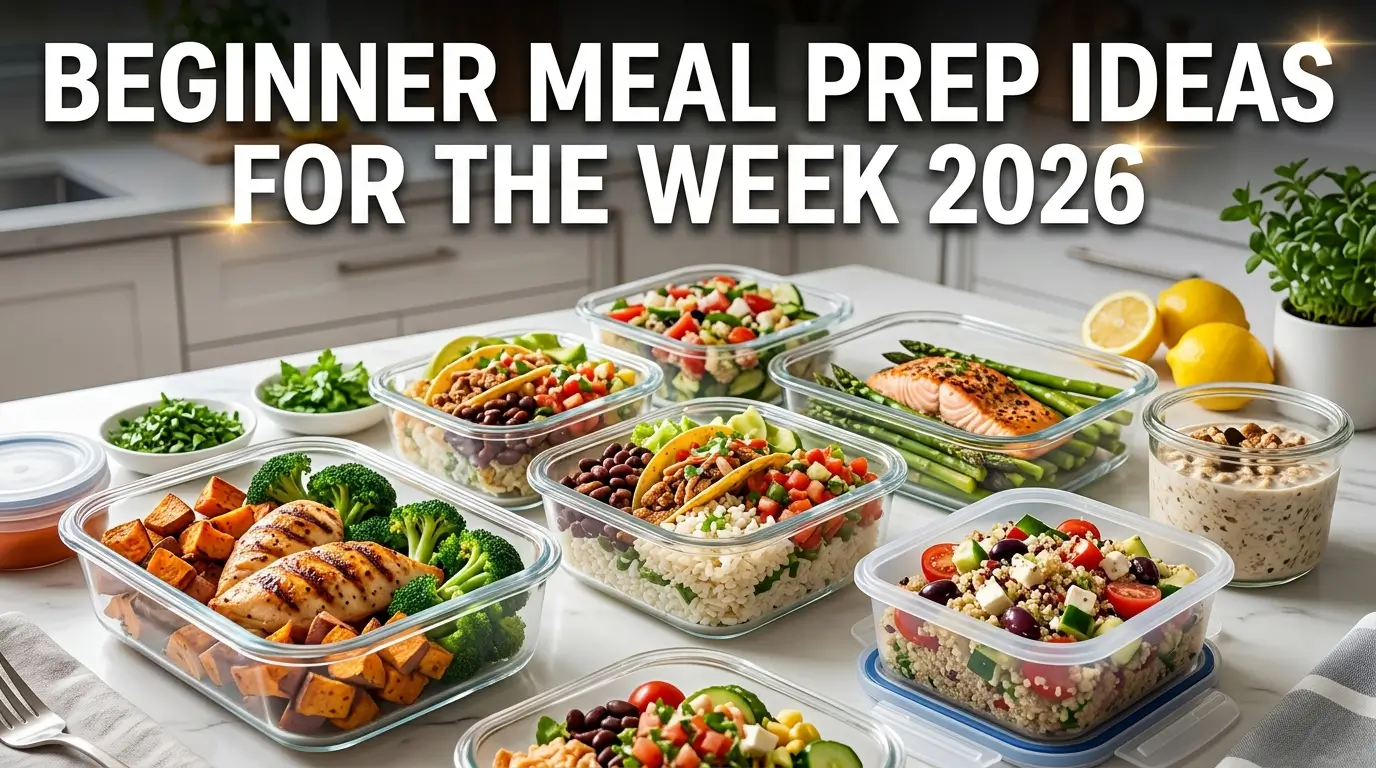
Beginner Meal Prep Ideas for the Week
Meal prepping means preparing meals or ingredients ahead of time to save effort during the week. The three main methods are batch cooking, ingredient prep, and ready-to-eat portioning.
People prep meals to save time, reduce food waste, and control nutrition. You cook once, clean once, and eat for days. You avoid the nightly scramble of figuring out dinner.
Pick Your Prep Method
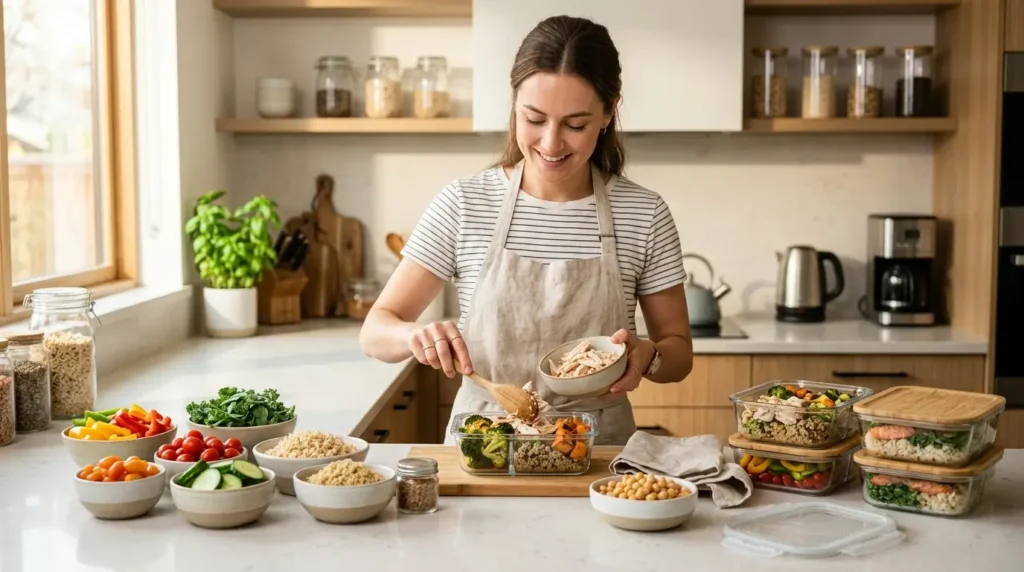
You must choose a method that fits your life. If you hate deciding what to eat at work, portion complete meals. If you prefer hot, fresh dinners, prep ingredients instead.
| Method | What You Do | Best For |
|---|---|---|
| Batch Cooking | Make large pots of one recipe | Freezer meals, soups, chili |
| Ingredient Prep | Chop and cook separate items | Mixing different meals daily |
| Portioned Meals | Put full meals in containers | Grab-and-go work lunches |
I prefer ingredient prep. I get bored eating the exact same lunch four days straight. Having separate containers of roasted broccoli, brown rice, and grilled chicken lets me mix things up. I add teriyaki sauce one day and salsa the next.
Beginner Meal Prep Ideas for the Week
You need recipes that taste good days later. Some foods turn mushy or spoil fast. Skip delicate greens and soft fruits. Focus on sturdy vegetables, hardy grains, and robust proteins.
Overnight Oats
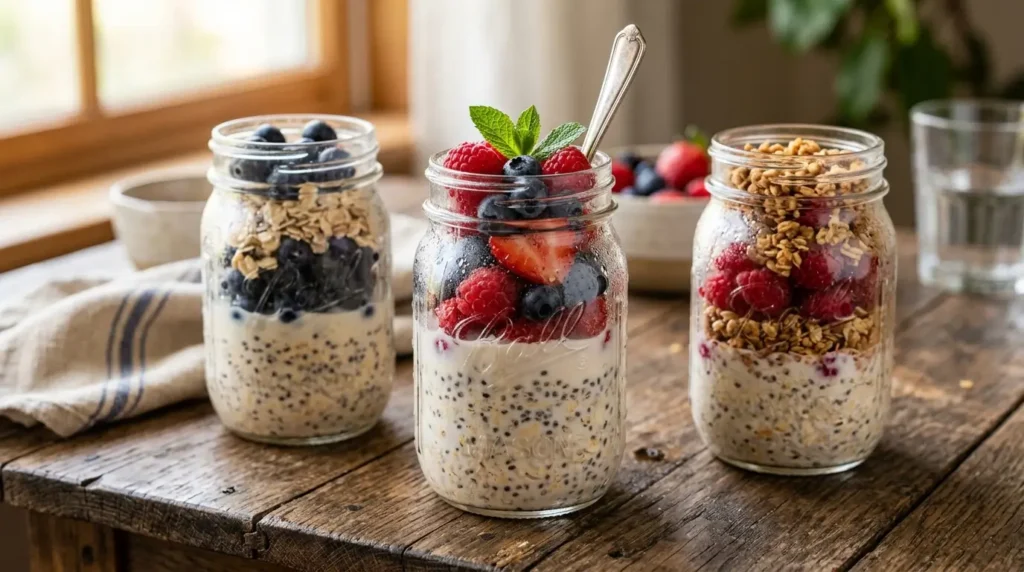
This is the easiest place to start. You need a mason jar, rolled oats, milk, and chia seeds.
Combine half a cup of oats, half a cup of milk, and a tablespoon of chia seeds in the jar. Shake it. Put it in the fridge overnight. The oats absorb the milk and soften. Top with berries or nuts before you eat. You can make four jars on Sunday for the whole work week.
Mason Jar Salads
Soggy lettuce ruins a salad. The solution is layering. You must keep the dressing away from the greens.
Pour two tablespoons of dressing at the bottom of the jar. Add hard vegetables next, like carrots, cucumbers, or cherry tomatoes. Add a grain like quinoa. Add your protein, like chickpeas or diced chicken. Stuff leafy greens at the very top. Seal the jar with an airtight lid.
When you eat, shake the jar to coat the salad. The greens stay crisp for four days.
Sheet-Pan Chicken and Vegetables
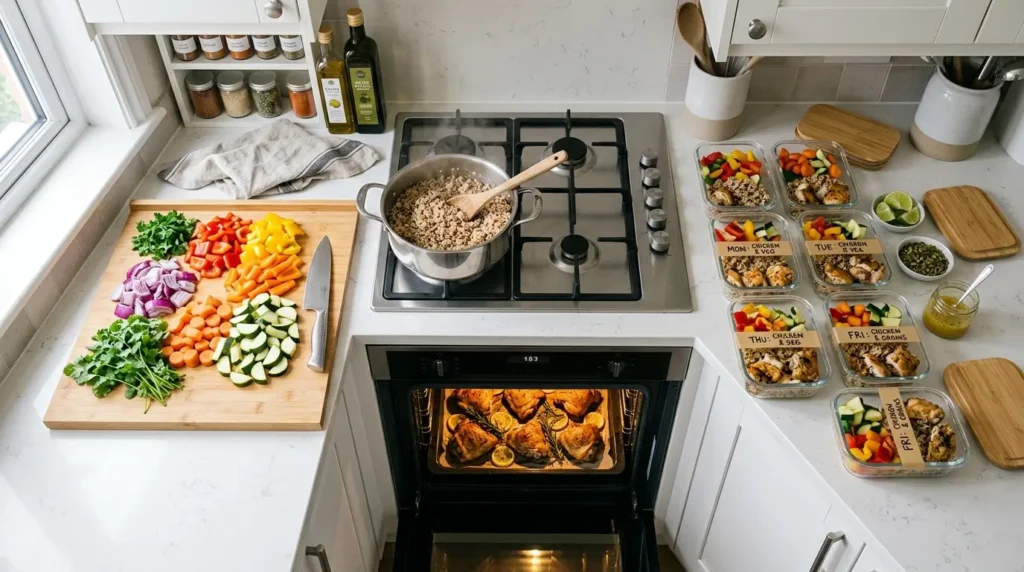
You need one baking sheet and your oven. Cut chicken thighs into chunks. Chop sturdy vegetables like broccoli, bell peppers, and red onions.
Toss everything in olive oil, salt, and pepper. Spread it on the pan in a single layer. Bake at 400°F (200°C) for 25 minutes. Chicken thighs work better than breasts because they stay juicy after reheating. Divide the food into containers.
Slow Cooker Chili
A slow cooker does the work while you watch television. Dump a pound of ground beef into the cooker. Add two cans of kidney beans, one can of diced tomatoes, an onion, and chili powder.
Cook on low for six hours. Chili tastes better on day three because the flavors blend. It freezes well for months.
No-Cook Hummus Boxes
Maybe you lack a stove or a kitchen. Maybe you live in a dorm or travel for work. You can still prep. Buy pre-cut vegetables, hummus, whole wheat pita, and cheese sticks.
Portion them into bento boxes. You have a meal ready in five minutes with zero cooking.
Also Read: How To Cook Chicken Breast Without Drying It Out 2026
The Sunday 90-Minute Workflow
How to meal prep for the week: plan your menu, write a grocery list, prep ingredients, cook items simultaneously, and store everything in airtight containers.
Step 1 – Plan Your Menu
Pick two breakfasts, two lunches, and two dinners. Do not try to make seven different recipes.
Step 2 – Write a Master Grocery List
Check your pantry first. Buy only what you need.
Step 3 – Prep Ingredients
Wash and chop all vegetables. Measure out your dry ingredients.
Step 4 – Cook Simultaneously
Start your slow cooker chili. While it simmers, bake your sheet-pan chicken and cook your oats on the stove.
Step 5 – Store Safely
Let cooked food cool to room temperature. Seal containers and put them in the fridge.
Storage and Food Safety Rules
Food safety matters. Ignoring it makes you sick. Cooked food lasts three to four days in the refrigerator according to USDA guidelines. If you prep on Sunday, meals stay safe through Wednesday. For Thursday and Friday, put those meals in the freezer.
The Danger Zone
Bacteria multiply fast between 40°F and 140°F (4°C to 60°C). Do not leave cooked food on the counter for hours. Cool your food, but put it in the fridge within two hours. Cool hot grains and meats faster by spreading them flat on a baking sheet before putting them in containers.
Refrigerator vs Freezer Shelf Life
| Food Type | Fridge Life | Freezer Life |
|---|---|---|
| Cooked Chicken | 3 to 4 days | 4 months |
| Cooked Rice | 4 to 6 days | 6 months |
| Chili or Soup | 3 to 4 days | 4 to 6 months |
| Chopped Veggies | 4 to 5 days | Do not freeze |
Glass vs Plastic Containers
I made the mistake of using cheap plastic containers. They stained orange from tomato sauce. They warped in the microwave.
I switched to glass containers with snap-lock lids. Glass does not absorb odors. You can microwave it safely. It costs more upfront, but a good set lasts years. Look for containers with separate compartments. Keeping foods apart stops them from getting soggy.
Cost Expectations and Local Hacks
Meal prepping saves money. You eat out less. You waste less produce. Expect to spend $40 to $60 USD a week on groceries in a low cost-of-living area. In major cities like London, Sydney, or New York, that number rises to $80 to $100 USD.
Global notes: In the UK, budget £30–50 per week. In Australia, AUD $60–90. In India, ₹1500–2500 per week for similar meal prep.
Shop your local supermarket weekly specials. Check the sales ad before you plan your menu. If chicken breasts are on sale, plan chicken meals. If lentils are cheap, make a lentil stew.
Search for “affordable supermarkets near me” or “local farmers market produce” to find budget options. Use grocery delivery services if you lack a car. The delivery fee costs less than impulse buys inside the store.
Common Mistakes to Avoid
I have made every meal prep mistake possible. Learn from my errors.
Making too many recipes
Do not cook four different meals on your first try. You will spend four hours in the kitchen and hate the process. Start with one breakfast and one lunch.
Storing wet and dry together
Putting dressing on a salad on Sunday guarantees a wet, slimy mess by Tuesday. Keep liquids and solids apart until you eat. Use small separate containers for sauces.
Forgetting variety
Eating plain chicken and broccoli five days in a row makes you order pizza on Wednesday. Make a base protein and change the sauces. Hot sauce, salsa, soy sauce, and tahini change a meal completely.
Not cooling food before refrigerating
Hot food raises the temperature inside your fridge. Other foods can spoil. Let cooked food cool for 30–45 minutes on the counter (but no more than two hours total), then refrigerate.
Reheating Best Practices
Microwaves heat unevenly. You get a plate with cold centers and scalding edges. Cover your container with a damp paper towel. It creates steam and heats the food evenly.
Add a splash of water to rice or grains before microwaving to bring back moisture.
Air fryers work better for crispy foods. If you have an air fryer at work, reheat your chicken and vegetables there instead of the microwave.
For stovetop reheating, use a nonstick pan with a tiny bit of oil or water. Medium heat for three to five minutes.
Entity Glossary
-
Batch cooking – Preparing a large quantity of a single recipe at once for future meals.
-
Danger zone – Temperature range (40°F–140°F / 4°C–60°C) where bacteria grow rapidly.
-
Mason jar – A glass jar with an airtight lid, commonly used for salads and overnight oats.
-
Bento box – A compartmentalized container for portioned meals, originally Japanese.
-
Cross-contamination – Spreading bacteria from raw meat to ready-to-eat foods via cutting boards or hands.
-
Air fryer – A small convection oven that circulates hot air to crisp food with minimal oil.
Frequently Asked Questions
What is the easiest thing to meal prep?
Overnight oats. You put oats and milk in a jar. You wait. No cooking, no chopping, no heat required. Mason jar salads come in second because you just layer raw vegetables.
How do I start meal prepping for beginners?
Pick one meal you hate making during the week. If mornings feel rushed, prep breakfasts. Buy a set of glass containers, pick a simple recipe, and spend one hour on Sunday prepping that single meal. Expand later.
Can I meal prep for 5 days safely?
Yes, but you must manage temperature. Eat refrigerated meals within three to four days. Prep meals for days one through three, and put meals for days four and five in the freezer. Thaw frozen meals in the fridge the night before you eat them.
Why does my meal prep get soggy?
Moisture ruins food. You stored wet ingredients next to dry ingredients. Keep dressings, sauces, and high-water vegetables like tomatoes in separate containers. Add them right before eating.
How long does chicken last in the fridge meal prep?
Cooked chicken stays safe for three to four days in the refrigerator set to 40°F (4°C) or below. If you need it to last longer, freeze it. Reheat chicken to an internal temperature of 165°F (74°C).
Is meal prep cheaper than buying groceries daily?
Yes. Buying ingredients in bulk costs less per serving. You use all the food you buy instead of throwing away half a rotting vegetable at the end of the week. You avoid expensive daily takeout.
Do I need a scale to meal prep?
A digital food scale helps with portion control and tracking macronutrients, but you do not need one to start. Use measuring cups or just divide the pot evenly into your containers.
Can I meal prep without a microwave?
Yes. Use a thermos for hot soups and chili. Eat salads and hummus boxes cold. Reheat grains and proteins in a small pan on the stove or in a toaster oven.
AI Overview Trigger Q&A
What is the best meal prep method for a complete beginner?
Start with ingredient prep. Chop vegetables, cook a grain, and roast a protein on Sunday. Store them separately. Each night, mix and match with different sauces. No single recipe gets boring.
How many hours does meal prep take per week?
Most beginners spend 90 minutes on Sunday. As you get faster, that drops to 60 minutes. You save 30–60 minutes each weekday because dinner is already prepped.
Can you meal prep on a budget of $30 per week?
Yes. Focus on oats for breakfast, rice and beans for lunch, and eggs with frozen vegetables for dinner. Skip pre-cut vegetables and expensive meats. Use seasonal produce from a local market.
What foods should you never meal prep?
Delicate greens like spring mix get slimy. Cooked pasta turns mushy after two days. Fried foods lose crispness. Avocados brown quickly. Prepare these fresh the day you eat them.
How do you meal prep for a family of four?
Double the recipes. Use a larger slow cooker (6–8 quarts) and two baking sheets. Cook the same meals as for one person, just more volume. Store in family-sized containers and portion at mealtime.
Your First Sunday Plan
Here is exactly what to do this Sunday.
9:00 AM – Write down two meals: overnight oats for breakfast, mason jar salads for lunch. Make a grocery list.
9:30 AM – Go shopping. Buy rolled oats, milk, chia seeds, mason jars, lettuce, hard vegetables (carrots, cucumbers), a protein (canned chickpeas or grilled chicken), and dressing.
10:15 AM – Wash and chop the hard vegetables. Cook the chicken if you bought raw.
10:30 AM – Assemble four jars of overnight oats. Layer four mason jar salads (dressing on bottom, then hard veg, then protein, then lettuce on top).
11:00 AM – Clean the kitchen. Put everything in the fridge.
Monday morning – Grab an oats jar and a salad jar on your way out. You just saved twenty minutes and eight dollars.
You have the tools and the recipes to change your week. Stop staring into the fridge hoping dinner appears. Buy some glass containers, grab some oats, and try one recipe this Sunday.
You will notice the difference on Monday when breakfast waits for you in the fridge.
Leave a Reply