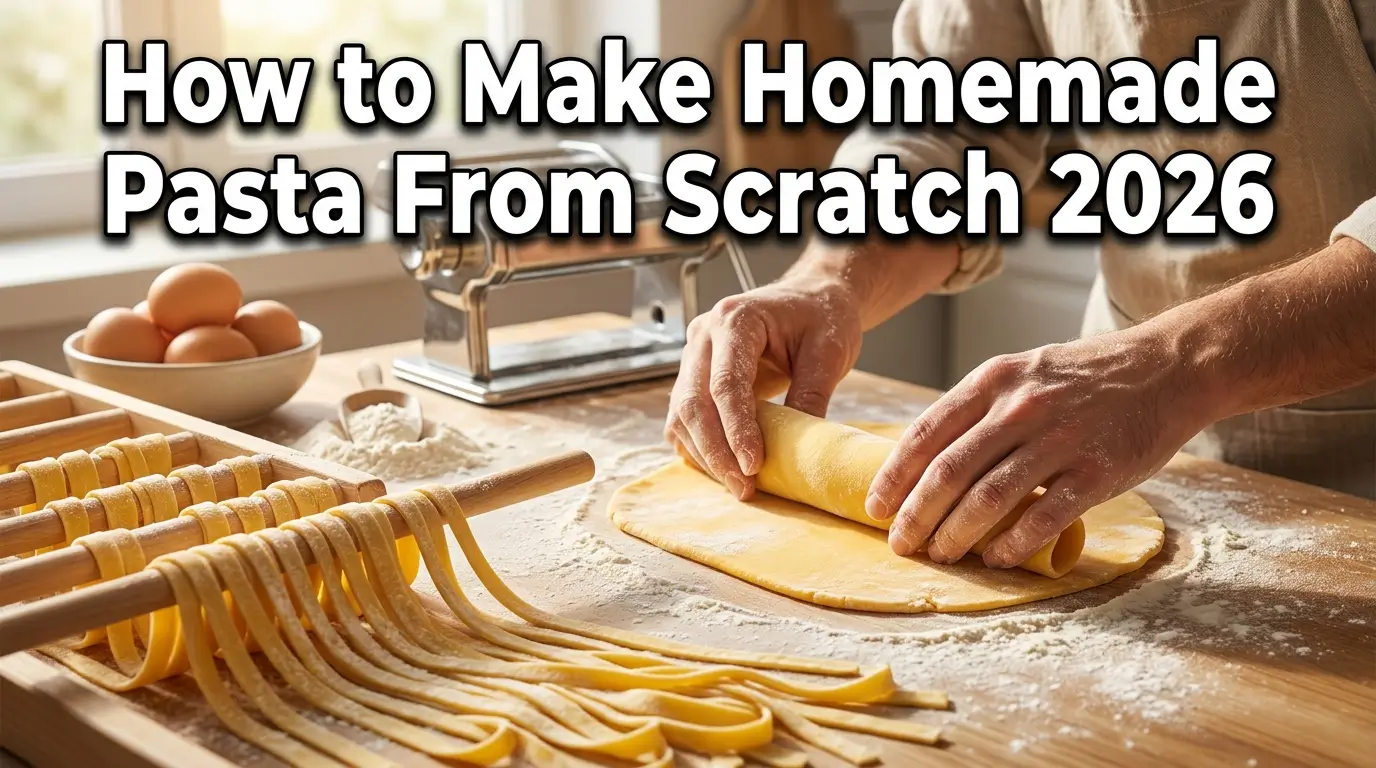
How to Make Homemade Pasta From Scratch
I still remember the first batch I made. The dough cracked at the edges, stuck to the counter, and cooked into something that felt like wet cardboard. My second batch was edible. My third, actually good.
That was fifteen years ago. Now I make pasta at least twice a month. Sometimes for a quick weeknight dinner, sometimes to impress people. The truth is, it’s not hard. You just need to stop being afraid of the dough.
Here is exactly how to make homemade pasta from scratch. No fluff. No fancy Italian nonna mystique. Just flour, eggs, and a few things I learned the hard way.
Quick Answer (for when you just need the steps)
Mix 100g 00 flour with 1 large egg per serving. Knead 10 minutes. Rest 30 minutes. Roll thin. Boil 2-3 minutes.
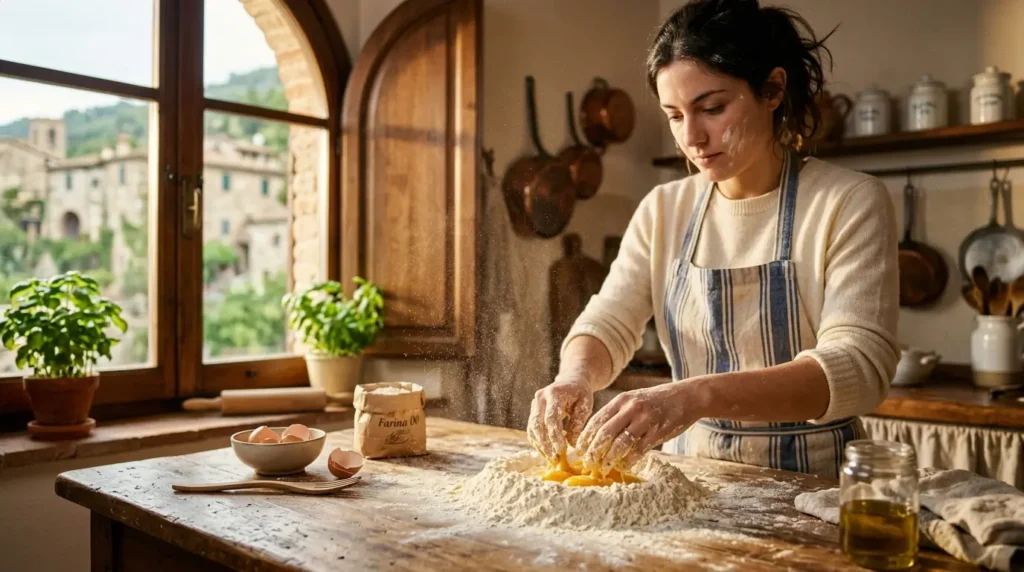
What You Actually Need
Let’s clear this up right now. You do not need a pasta machine. You do not need a marble board. You do not need to fly to Bologna.
The short list:
-
00 flour (or all-purpose if you must)
-
Eggs
-
A clean counter or big cutting board
-
Your hands
-
A rolling pin (a wine bottle works too)
That’s it for the basic batch.
The slightly longer list (for people who cook often):
-
Bench scraper – maybe $8 at a restaurant supply store
-
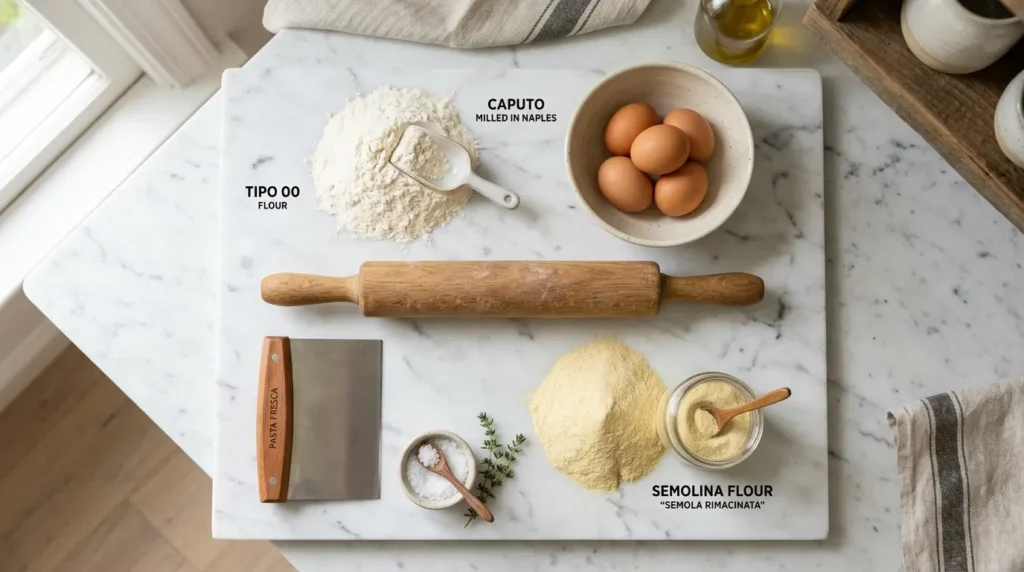
Semolina flour – for dusting, not for the dough
-
Pasta machine – Marcato Atlas 150 is the standard. Costs about $70-$90 depending where you live
I used a rolling pin for two years before buying a machine. The machine makes it faster and more even. But you learn more by hand.
The Flour Question That Confuses Everyone
Walk into any grocery store and you see ten kinds of flour. Here is what matters.
| Flour Type | Works for Pasta? | Texture Result |
|---|---|---|
| 00 flour | Best | Silky, tender, restaurant-quality |
| All-purpose | Yes | Chewier, slightly heavier |
| Bread flour | Yes but risky | Very chewy, needs more eggs |
| Semolina | Only for dusting | Gritty if used as main flour |
00 flour is milled finer than anything else. Caputo is the brand most Italian home cooks use. King Arthur makes a good one too. If you cannot find 00, use all-purpose and add one extra egg yolk for richness.
One more thing. The ratio is 100g flour to 1 large egg. That serves one person. Scale up from there. Weigh the flour. Cups are too inconsistent. A scale costs $12 and removes all guesswork.
Also Read: Easy Recipes With 5 Ingredients or Less 2026
The Classic Egg Pasta Dough
This recipe serves four.
Ingredients:
-
300g 00 flour
-
3 large eggs
-
1 teaspoon olive oil (optional – I skip it most times)
-
Pinch of salt (optional)
Total time: 50 minutes (10 active, 40 resting)
Step-by-Step Method
1. Make a well in the flour
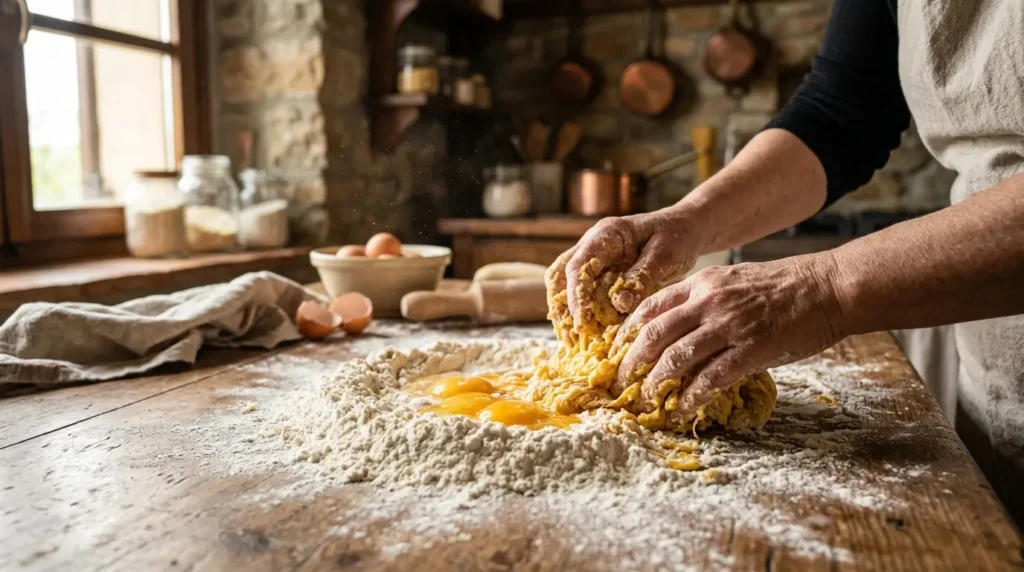
Put the flour on a clean counter. Use your fist to press a deep hole in the center. The walls should be high enough to hold three eggs without breaking. If they break, you made the walls too thin. Just rebuild the mound.
2. Add the eggs
Crack the eggs directly into the well. Add the oil and salt if using. Do not break the flour walls yet.
3. Beat the eggs with a fork
Use a fork to scramble the eggs inside the well. Slowly pull flour from the inner walls into the eggs. Keep going until the mixture looks like a thick paste.
4. Bring it all together
Use a bench scraper or your hands to mix the remaining flour into the egg paste. It will look dry and shaggy. Do not add water yet. Keep pressing and folding until no dry flour remains.
5. Knead for 10 minutes
Push the heel of your palm into the dough. Fold it over. Rotate a quarter turn. Repeat. Do this for eight to ten minutes.
How do you know when to stop? The dough should feel smooth, not sticky. Press it with a finger. It should spring back slowly. If it cracks at the edges, knead two more minutes. If it sticks to your hand, dust with a tiny bit of flour.
I have made this dough over fifty times. The first five times I stopped too early. The pasta was tough. Do not stop early.
6. Rest the dough
Wrap the dough in plastic wrap. Let it sit on the counter for 30 minutes. Do not skip this. Resting lets the gluten relax. If you roll it immediately, the dough snaps back like a rubber band. You will fight it the whole time.
7. Roll the dough
Cut the rested dough into four pieces. Work with one piece at a time. Keep the others covered.
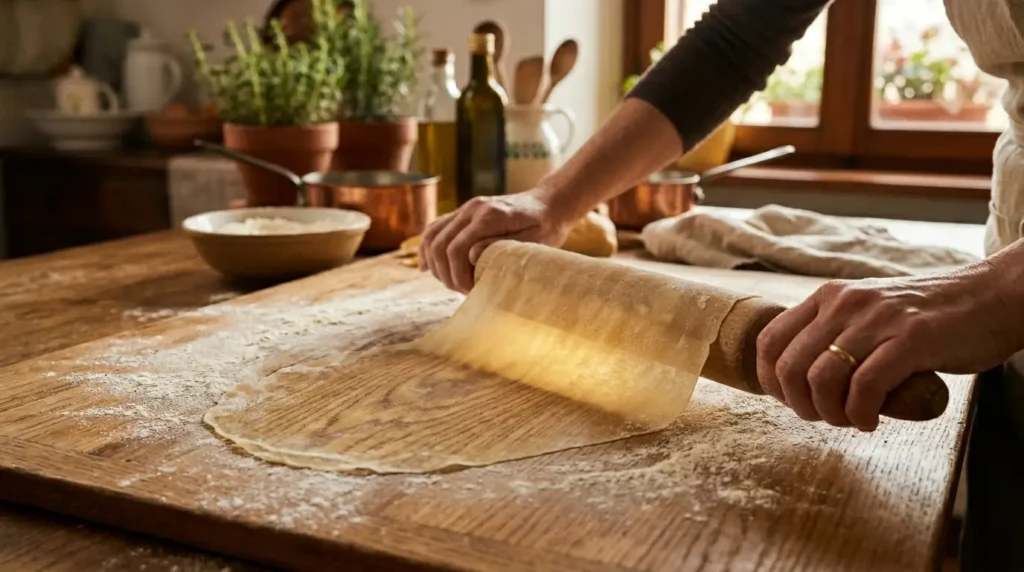
Flatten the piece with your palm. Run it through a pasta machine on the widest setting. Fold the ends into the center like a letter. Run it through again on the same setting. Do this three times. Then move to the next thinner setting. Keep going until the sheet is thin enough to see your hand through it.
Without a machine: Use a rolling pin. Roll from the center outward. Turn the dough a quarter turn every few rolls. Dust with semolina as needed to prevent sticking. It takes longer. But you will feel like a god when you finish.
8. Cut into shapes
Let the sheet dry for two minutes before cutting. Then decide what you want.
| Shape | Cut Size | Best Sauce |
|---|---|---|
| Tagliatelle | 6mm wide strips | Meat ragù |
| Fettuccine | 12mm wide strips | Alfredo or mushroom |
| Pappardelle | 25mm wide strips | Wild boar or hearty meat sauce |
| Lasagna | Full sheets | Béchamel and Bolognese |
| Ravioli | 3cm squares | Brown butter and sage |
To cut strips, loosely roll the sheet into a tube. Slice crosswise at your chosen width. Unroll the noodles. Toss them in semolina so they do not stick together.
9. Cook the pasta
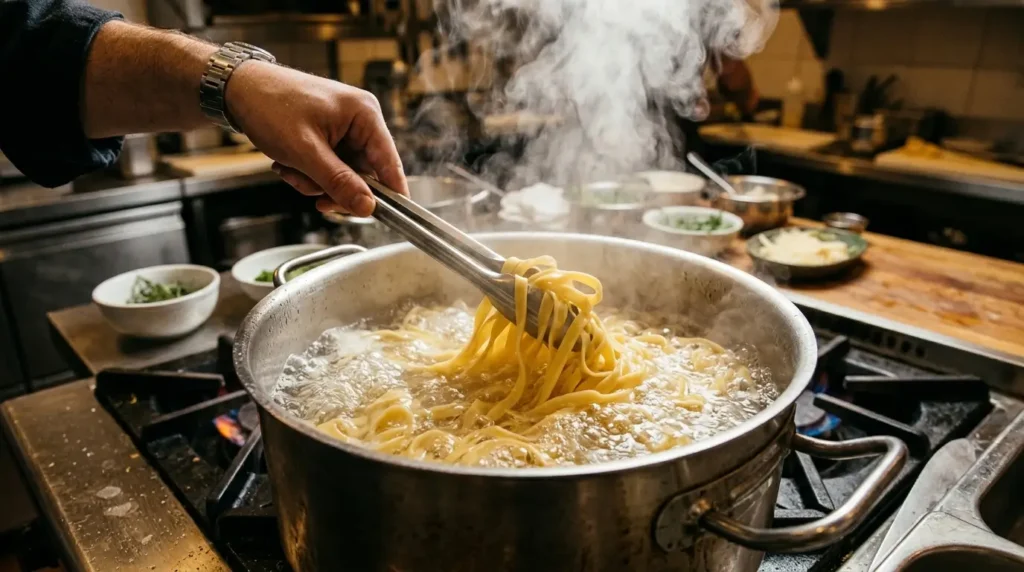
Bring a large pot of water to a rolling boil. Add salt. A lot. The water should taste like the ocean.
Drop the pasta in. Stir right away. Fresh pasta cooks fast. Two to three minutes is almost always enough. Taste a piece at two minutes. It should be firm but not hard. No chalky center like dry pasta.
Drain it. But save a cup of the pasta water before you do. That water is full of starch. It helps sauce stick to the fresh noodles.
Toss the pasta with your sauce immediately. Add a splash of the reserved water if the sauce seems thick.
Common Mistakes I Still Make Sometimes
Even after years, I mess up. Here is what goes wrong and how to fix it.
-
Dough cracks at the edges while rolling – It is too dry. Mist it with water from a spray bottle. Wrap and rest for 15 more minutes.
-
Pasta sticks together after cutting – You did not use enough semolina. Next time, dust generously. Also do not stack noodles directly on top of each other. Nest them loosely.
-
Chewy, rubbery texture – You over-kneaded or rolled it too thick. Fresh pasta needs to be thinner than you think. Almost see-through.
-
Dough is sticky like bubblegum – Too much egg or humidity is high. Add small amounts of flour, one teaspoon at a time, until it becomes workable.
-
Noodles turn to mush in the pot – You overcooked them. Start checking at 90 seconds next time.
What If You Do Not Have a Machine?
I learned entirely without a machine. Here is the trick.
Roll the dough as thin as you can. Then fold it into a flat rectangle. Roll again. Unfold. Rotate. Repeat. This builds layers and stretches the gluten evenly.
It takes practice. My first hand-rolled sheets were uneven – thick in the middle, thin at the edges. That still makes good pasta. Just cut thicker noodles so they cook evenly.
Eggless and Gluten-Free Options
Eggless pasta (water dough)
-
300g semolina rimacinata
-
150g warm water
-
5g salt
Mix like regular pasta. Knead for 8 minutes. Rest for only 15 minutes. Roll and cook the same way. This dough is more forgiving and dries faster.
Gluten-free pasta
Use 200g gluten-free flour blend (Caputo Fioreglut works best) plus 100g tapioca starch. Add 3 whole eggs and 2 egg yolks. Knead for only 3 minutes. Gluten-free dough does not need long kneading. Roll immediately. Cook for 2 minutes.
How to Store Fresh Pasta
You can make pasta ahead. Here is how.
| Storage Method | How Long | How To |
|---|---|---|
| Refrigerator | 2 days | Dust with semolina, put in a sealed container |
| Freezer | 2 months | Lay noodles on a tray, freeze solid, then bag |
| Dried completely | 2 weeks | Hang on a rack for 24 hours, store in a jar |
Warning for humid climates. If you live in Florida, Singapore, or anywhere with sticky air, do not dry pasta at room temperature. It will mold in eight hours. Freeze it instead.
Cost Breakdown
Making pasta at home is cheap.
-
One batch (4 servings): about $1.50 for flour and eggs
-
Premium dry pasta (De Cecco, 4 servings): about $4
-
Fresh pasta from a store: $6 to $10
The machine adds an upfront cost. But you break even after about 15 batches. I have had my Marcato Atlas for eight years. Still works perfectly.
Local and Regional Notes
Where you live changes a few things.
Finding ingredients by region:
-
US: Look for Caputo 00 flour at Whole Foods or Amazon. Semolina is near the regular flour.
-
UK: Waitrose sells 00 flour. Tesco stocks it in larger stores. Search “semolina flour Tesco” online to check local availability.
-
Australia: Marcato machines cost about $90 AUD at Victoria’s Basement. 00 flour is at most Woolworths.
-
Canada: Eataly Toronto carries everything. Longo’s has Caputo flour.
Humidity adjustments
-
Humid climate (Florida, Singapore) – Increase flour by 10%. Reduce resting time to 20 minutes.
-
Dry climate (Arizona, Dubai) – Add 1 teaspoon water per egg. Rest covered with a damp towel.
-
High altitude (Denver, Bogotá) – Reduce flour by 5%. Boil pasta one minute longer.
Finding a pasta class
Search “pasta making class near me” for hands-on help. Sur La Table and Williams Sonoma offer classes in the US. Eataly runs them in multiple countries. Local Italian delis sometimes host workshops.
What Sauce Should You Make First?
Do not start with a heavy tomato sauce. Fresh pasta is delicate. Heavy sauces weigh it down.
Make these first:
-
Brown butter and sage – Melt butter until it smells nutty. Add fresh sage leaves. Toss with pasta.
-
Cacio e pepe – Grated Pecorino Romano, black pepper, pasta water. That is it.
-
Garlic and oil – Thinly sliced garlic, olive oil, red pepper flakes. Simple and fast.
Save ragù and cream sauces for when you have made pasta a few times.
Real Talk About Your First Batch
Your first pasta will not be perfect. The sheets will have thick spots. Some noodles will break. A few will stick together.
That is fine.
I have taught ten friends to make pasta. Every single one made mistakes the first time. Every single one said it still tasted better than boxed pasta.
Because it does. Fresh pasta has a tender bite and absorbs sauce in a way dried pasta cannot. Even the ugly batches are worth eating.
So make a mess. Get flour on your shirt. Eat the mistakes. Then make it again next week.
People Also Ask (Real Questions from Real Cooks)
Can I use all-purpose flour instead of 00 flour?
Yes. The pasta will be chewier. Add one extra egg yolk per two cups of flour to bring back some richness. I did this for two years before finding 00 locally.
Why does my homemade pasta turn out chewy?
Two reasons. You either under-kneaded or rolled it too thick. Knead a full ten minutes. Roll until you can almost see through the dough. Chewy texture disappears.
How long does fresh pasta need to rest?
At least 30 minutes at room temperature. Do not skip this. The gluten needs time to relax. Rolling un-rested dough is like fighting a rubber band.
Do I really need semolina flour?
No. You can use 00 or all-purpose to dust the counter and noodles. But semolina is coarser and does a better job preventing sticking. One bag lasts a year.
How do I know when pasta dough is kneaded enough?
Press it with your finger. The dough should slowly spring back. If it cracks, knead more. If it sticks to your finger, dust with flour and knead two more minutes.
Can I make pasta dough in a food processor?
Yes. Pulse the flour and eggs until it looks like wet sand. Then dump onto a counter and knead by hand for 2 minutes. The food processor saves time but does not replace hand kneading entirely.
How to store fresh pasta overnight?
Dust generously with semolina. Twist into loose nests. Place in a container with a slightly open lid. Refrigerate for up to two days. Do not seal tight – trapped moisture makes the noodles sticky.
Conclusion
Making pasta from scratch is one of those skills that looks impressive but is actually just a few simple steps repeated. Flour, eggs, ten minutes of kneading, half an hour of patience. That is it.
My advice? Make a batch this weekend. Expect the first one to be ugly. Eat it anyway. Then freeze half the second batch for next Tuesday when you do not feel like cooking.
You will get faster. You will get better. And one day you will roll out a sheet of pasta so thin and silky that you will wonder why you ever bought the boxed stuff.
Now go wash your hands and clear some counter space.
Leave a Reply