Simple One-Pot Meals for Beginners
A one pot meal is exactly what it sounds like: protein, vegetables, starch, and liquid all cooked together in a single vessel, from start to finish. No draining pasta into a colander you don’t own. No separate sauce pan. One pot, one cleanup.
The term covers more ground than most people expect:
-
Stovetop pot meals — soups, stews, braises, pasta
-
Skillet dinners — everything sauteed in a wide pan
-
Sheet pan meals — roasted in the oven on one tray
-
Slow cooker meals — set in the morning, eat at dinner
-
Instant Pot meals — pressure-cooked in a fraction of normal time
You don’t need all of these. Start with one method and one vessel. The rest can come later.
The Only Equipment You Actually Need to Start
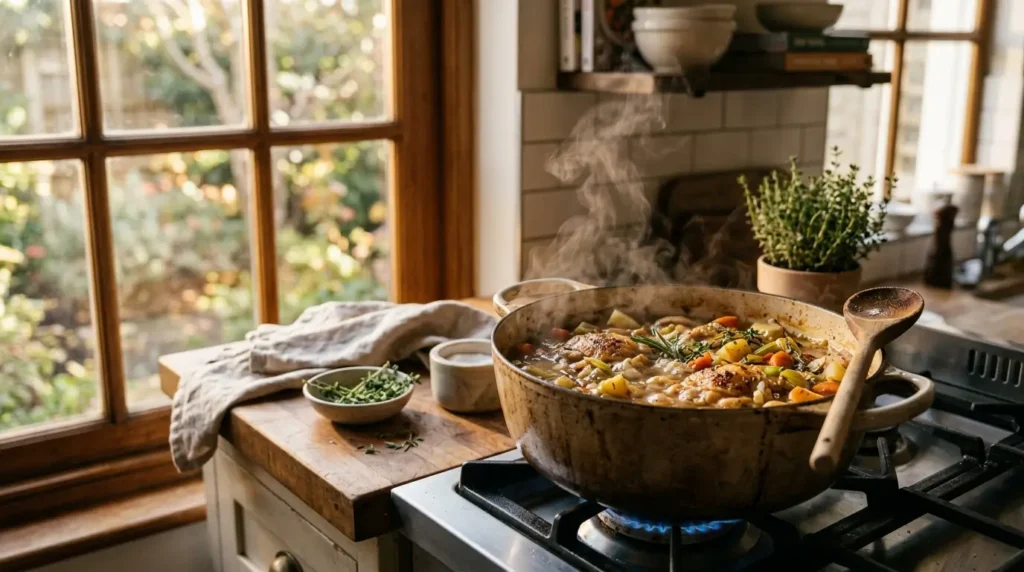
Here’s where most beginner cooking guides go wrong. They list eight pieces of equipment you should buy. Then you spend $200 on things you barely use.
You need two things:
A 5-quart Dutch oven or deep sauté pan — This is your workhorse. It does soups, stews, pasta, and braises. A decent Lodge cast iron Dutch oven runs around $50. A budget-friendly option from a superstore runs $25–$35 and works fine for beginner cooking. Le Creuset is excellent but costs $300+, and you do not need it to make good lentil soup.
A 12-inch skillet — For quick weeknight skillets and anything you want to brown first. A Lodge cast iron skillet is $20–$30 and lasts forever.
That’s it. Those two pieces handle 90% of the recipes in this guide. If you want to add one more thing, get a half-sheet pan for $15–$20. Sheet pan dinners are some of the most forgiving beginner meals you can make.
| Vessel | What It Does | Rough Cost |
|---|---|---|
| Dutch oven (5 qt) | Soups, stews, pasta | $25–$150 |
| 12-inch skillet | Stir-fries, skillet meals | $20–$80 |
| Half-sheet pan | Roasted one-pan meals | $15–$25 |
The Framework That Makes Any One Pot Meal Work
This is the part competitors never teach. They give you recipes. What actually helps is understanding why the steps happen in that order. Once you get this, you can cook without following a recipe line by line.
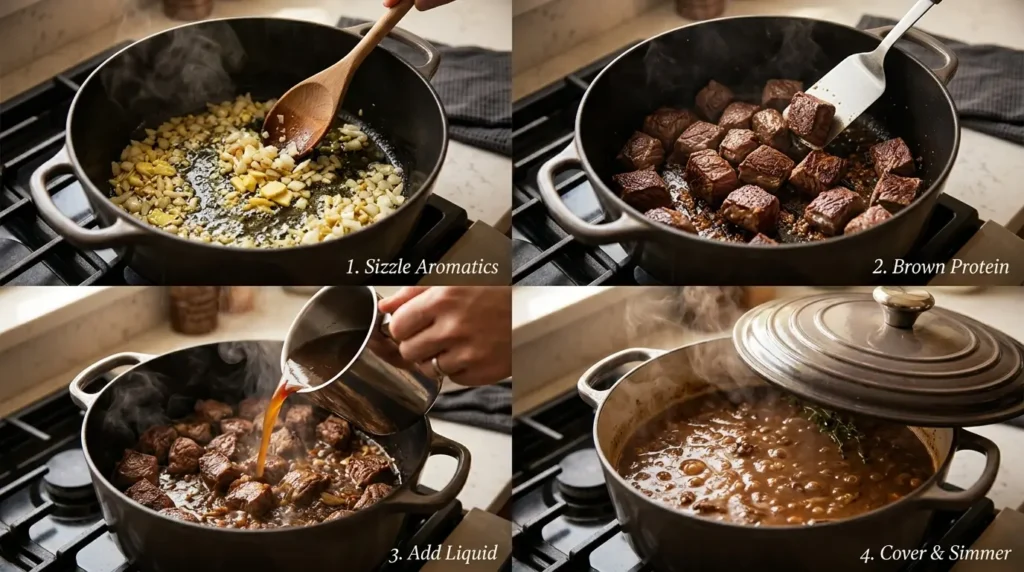
Step 1 — Heat the vessel, then add fat
Get the pot or pan hot before adding oil. Medium heat for most meals. Medium-high if you want a sear.
Step 2 — Cook your aromatics first
Aromatics are the flavor base: usually diced onion (3–4 minutes) then minced garlic (60 seconds). Don’t rush this step. The whole dish builds on it. This is what mise en place thinking actually means — your prep happens before the heat goes on.
Step 3 — Brown your protein
Don’t skip browning. The Maillard reaction — the same chemical process that makes toast taste like toast — creates depth of flavor that simmering alone can’t produce. A pale, unbrowned chicken thigh tastes flat. A seared one tastes like dinner.
Step 4 — Deglaze if needed
If brown bits are stuck to the bottom of the pot after searing, pour in a splash of broth or water and scrape them up with a wooden spoon. Those bits are concentrated flavor. Don’t waste them.
Step 5 — Add liquid, then your slow-cooking ingredients
Broth, canned tomatoes, or coconut milk. Then potatoes, carrots, dried beans — anything that takes a long time to cook.
Step 6 — Add starch at the right time
Rice and pasta don’t go in at the start. They absorb liquid fast. Add rice about 20 minutes before you want to eat. Add pasta 10–14 minutes out, depending on the shape. Short pasta holds up better than spaghetti in one pot cooking.
Step 7 — Add leafy greens and fresh herbs last
Spinach, kale, and fresh basil wilt or lose their brightness if cooked too long. Add them in the last 3–5 minutes.
Step 8 — Taste and adjust before serving
This is the most skipped step in beginner cooking. Taste the dish. Does it need salt? A squeeze of lemon juice? A pat of butter? These small adjustments at the end are what separate a good meal from a forgettable one.
Also Read: How to Follow a Recipe Step by Step 2026
Ingredient Timing at a Glance
| Ingredient | When It Goes In |
|---|---|
| Onion, garlic | First, in hot fat |
| Dried spices | Right after aromatics |
| Protein (meat/beans) | After spices |
| Root vegetables | With liquid |
| Rice | 18–22 min before done |
| Pasta | 10–14 min before done |
| Leafy greens | Last 3–5 minutes |
| Fresh herbs, lemon | Right before serving |
15 Beginner One Pot Meals Worth Making Tonight
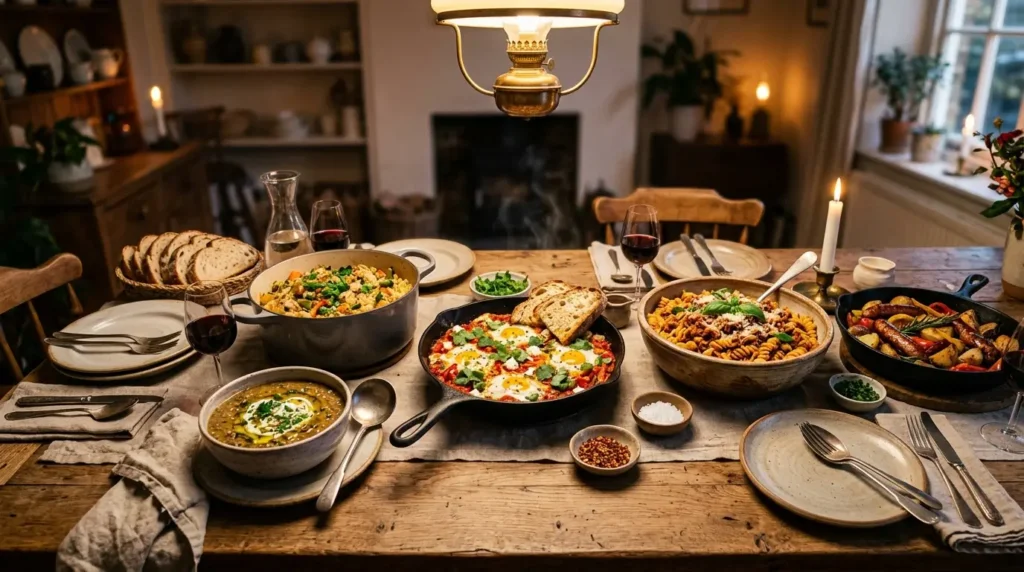
These are meals I’d actually recommend to someone who has never cooked a real dinner. No complicated techniques. No obscure ingredients.
Also Read: How to Make Homemade Pasta From Scratch 2026
Stovetop Meals
-
Shakshuka
Eggs poached in spiced tomato sauce. One deep skillet, 25 minutes. The sauce is forgiving — even if you overcook it slightly, it still tastes good. This is the single best first-time meal I know. -
One Pot Garlic Butter Pasta
Pasta cooked directly in broth with garlic and butter. The starch from the pasta thickens the liquid into a sauce as it cooks. Martha Stewart’s recipe developer Nora Singley first brought this method to the mainstream in 2013, and it went viral for a reason — it actually works. Takes 20 minutes. -
One Pot Chicken and Rice
Brown chicken thighs first. Remove them. Sauté onion and garlic in the same pot. Add broth and rice, nestle the chicken back in, cover and simmer for 20 minutes. Done. Under $10 for four servings in the US. -
Red Lentil Soup
Red lentils cook in 15–20 minutes and don’t need soaking. A pot of lentil soup with cumin, turmeric, onion, and broth costs roughly $4–6 for four servings in the US, around £3–4 in the UK. It’s one of the cheapest filling dinners you can make anywhere. -
One Pot Taco Pasta
Ground beef or turkey, taco seasoning, canned tomatoes, pasta, and broth — all cooked in one pot in 30 minutes. One of the most-saved beginner recipes on Simply Recipes in 2025 for a reason. Kids eat it. Adults eat it. Nobody complains. -
Black Bean and Corn Skillet
Canned black beans, frozen corn, salsa, and cumin. Ready in 15 minutes. Fully vegan, naturally gluten-free, and costs under $4 for two people. Serve it over rice or in tortillas. -
One Pot Mac and Cheese
Pasta, milk, and shredded cheese cooked together. No roux. No separate cheese sauce. Takes 20 minutes and tastes better than the box version.
Sheet Pan Meals
-
Sheet Pan Chicken Thighs and Broccoli
Bone-in chicken thighs seasoned with garlic powder, paprika, and olive oil. Broccoli florets tossed alongside. Roast at 425°F (220°C) for 35–40 minutes. One pan, zero technique required. Check that chicken reaches 165°F (74°C) internal temperature before serving — this is the USDA minimum for poultry safety. -
Sheet Pan Sausage and Peppers
Italian sausages, sliced peppers, and onions roasted until the edges caramelize. Serve over rice or in hoagie rolls. 40 minutes, total. -
Sheet Pan Salmon with Asparagus
Salmon fillets and asparagus spears, seasoned with lemon and olive oil. 20–25 minutes at 400°F. Fish is done when it flakes with a fork. USDA recommends 145°F (63°C) internal temperature for fish.
Slow Cooker Meals
-
Slow Cooker Chicken Soup
Chicken legs, vegetables, broth, and dried herbs. Set it in the morning on low. Come home to soup. Shred the chicken before serving. The slow cooker does the work. -
Slow Cooker Chili
Brown the ground beef first if you want deeper flavor. If you’re really short on time, skip the browning — it still tastes good after 6 hours on low. Canned beans, canned tomatoes, chili powder, cumin. That’s the whole recipe. -
Slow Cooker White Bean and Kale Stew
Purely pantry-based. Canned white beans, vegetable broth, garlic, canned tomatoes, dried rosemary, and a few handfuls of kale added at the end. Vegan, warming, and costs around $5–7 for four servings.
Instant Pot Meals
-
Instant Pot Beef Stew
Beef chuck, potatoes, carrots, and broth under pressure for 35 minutes. What normally takes 2.5 hours on the stove happens in under an hour, including the time it takes to build and release pressure. Let the pressure release naturally for at least 15 minutes before opening the lid. -
Instant Pot Chicken Tikka Masala
Chicken thighs, canned tomatoes, coconut milk, and a tikka spice blend. 10 minutes under high pressure. Serve over basmati rice. Restaurant flavor at home, without standing at a stove for an hour.
One Pot Meals Around the World
One pot cooking isn’t an American concept. Every culture has a version of it.
If you’re in South Asia, you already know khichdi — lentils and rice cooked together in one pot. It’s beginner cooking in its most ancient form. Dal, the spiced lentil dish eaten daily across India and Pakistan, cooks in a single pot in under 30 minutes.
In Morocco, a tagine is a clay pot that slow-cooks meat and vegetables in aromatic spice blends. You can replicate the dish in a Dutch oven if you don’t have the traditional vessel.
In West Africa, jollof rice is cooked in one pot — rice simmered in a spiced tomato base with protein added. The method is the same framework described above, just with a different spice palette.
In Japan, oyakodon is chicken and egg simmered in a dashi broth and served over rice — cooked in a single pan in 15 minutes.
The recipes change. The framework is the same everywhere.
The Mistakes That Actually Trip Beginners Up
Overcrowding the pan
If you pile too much protein into a skillet, the temperature drops and everything steams instead of browning. You lose the flavor development. Brown in batches if needed.
Adding everything at once
I see this constantly. Potatoes and spinach going in together. Potatoes need 20 minutes. Spinach needs 3. One of them will be mush and one will be raw. Use the timing chart above.
Under-seasoning the liquid
Your broth should taste good before you add pasta or rice. If the liquid is bland going in, the final dish will be bland coming out. Season in layers, not just at the end.
Using a pot that’s too small
This one surprises people. A too-small pot causes overflow, prevents browning, and makes stirring impossible. Use a vessel that feels one size larger than you think you need.
Never tasting during cooking
Taste at every stage. Add salt. Squeeze lemon juice. Taste again. This is the most important skill in cooking, and it costs nothing.
Meal Prep and Storage
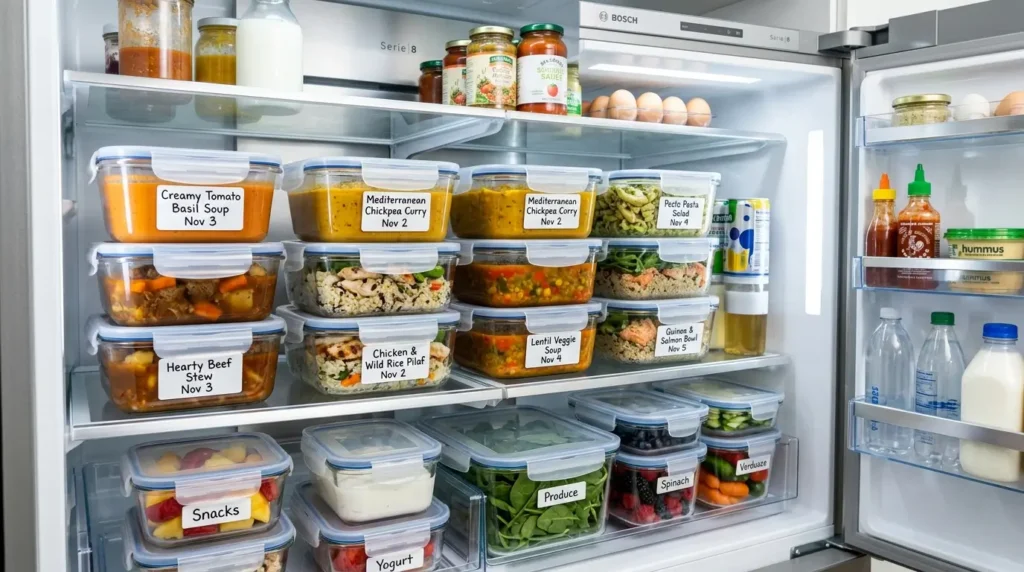
One pot meals are ideal for batch cooking. Most soups, stews, and grain dishes keep for 4–5 days in the refrigerator and up to 3 months in the freezer.
Let food cool to room temperature before refrigerating — but don’t leave it out for more than 2 hours. This follows standard USDA food safety guidelines on perishable food storage.
Freeze in single-portion containers. Label them with the date. Future meals, no effort required.
One thing worth knowing: most one pot pasta dishes don’t freeze well. The pasta absorbs the sauce and turns mushy. Soups and stews freeze fine. Rice dishes freeze fine. Pasta-based meals are best eaten within 3 days.
Budget Breakdown
| Region | Cost Per Serving |
|---|---|
| United States | $1.50–$4.00 |
| United Kingdom | £1.50–£3.50 |
| India / Pakistan | ₹50–₹150 |
| Australia | AUD $3–$7 |
Lentil soup, black bean skillet, and one pot pasta are consistently the cheapest options in any region. Protein-heavy dishes like beef stew or chicken tikka masala sit at the higher end of these ranges.
Frequently Asked Questions
What is the easiest one pot meal for a complete beginner?
Shakshuka. Eggs poached in spiced tomato sauce — one skillet, six ingredients, 25 minutes. Nothing can go badly wrong. If you’ve never cooked before in your life, start there.
What pot should I buy first?
A 5-quart Dutch oven or deep sauté pan. Around $25–$50 gets you something solid. Lodge makes reliable cast iron options at the low end. You don’t need Le Creuset to make good food.
Can I cook pasta in one pot without draining it?
Yes. Use less liquid than you think you need — roughly 2 cups of broth per 4 oz of pasta, depending on shape. Stir frequently. The starchy liquid becomes the sauce. Check the pasta 2 minutes before the package time says, because it cooks faster when liquid is limited.
How do I build flavor in a one pot meal?
Start with aromatics — onion and garlic cooked in fat before anything else. Brown your protein. Deglaze any bits stuck to the pan. Season the liquid before adding starch. Finish with acid (lemon juice or vinegar) to brighten the whole dish.
Is one pot cooking healthy?
It depends on what goes in the pot. Lentil soup, chicken and vegetable stews, bean-based dishes — all are genuinely nutritious. The method itself is neutral. You can cook very healthy food this way. You can also cook very heavy food this way. Ingredient choices drive the nutrition, not the technique.
Can I meal prep one pot meals?
Yes, and it’s one of the best uses for them. Double any recipe, divide into containers, refrigerate for 4–5 days or freeze for up to 3 months. Soups, stews, and grain dishes hold up well. Pasta dishes don’t freeze well — the noodles get soft.
What if I don’t have the exact ingredients a recipe calls for?
Swap within categories. No chicken thighs? Use drumsticks, canned chickpeas, or firm tofu. No broth? Water with a pinch of salt and extra aromatics works. No fresh garlic? Garlic powder works in a pinch (use about 1/4 teaspoon per clove). Cooking is more flexible than most recipes suggest.
How do I know when a one pot meal is done?
For meat: use a food thermometer. Chicken should hit 165°F (74°C). Pork and fish need 145°F (63°C). For pasta and rice: taste them. They should have a slight firmness but no raw center. For soups and stews: taste the broth. If it tastes good and the vegetables are tender, you’re done.
One Last Thing
The goal isn’t to become a great cook by next Tuesday. The goal is to cook three or four meals this month without it being a disaster. One pot cooking gives you the best chance of doing that, because the margin for error is wide and the cleanup is minimal.
Pick the recipe that sounds least intimidating from the list above. Cook it this week. Cook it again the week after. The second time will feel completely different from the first.
After a few rounds, the framework starts to feel natural. You’ll stop checking the recipe every two minutes and start trusting what you see and smell in the pot. That’s when cooking actually gets fun.
Leave a Reply