
How to Thicken a Sauce Without Cornstarch
On Tuesday night in 2009, I wrecked a lemon chicken sauce. Dining room was filled with visitors. The sauce was thin and lightly colored and in puddles on plates like flavored water. I did not have any cornstarch. Flour I poured in whole from the bag and started mixing like crazy and served up something that resembled paste. No one said anything good.
Making me follow a long trail, I experimented with all the thickening methods I could find, but this one was the one that failed. Twenty years later I have 6 different cornstarch substitutes in my cupboard. They are all used to solve a specific problem. Here is all I know about so you don’t have to read through all the paste.
Why Bother Skipping Cornstarch?
Cornstarch works. However, there are definite drawbacks.
Can cause cloudiness in sauces. Ever have a stir fry with a cornstarch thickened sauce and notice how it gets ‘milky’? This is good for some recipes. If it’s a fruit glaze or a pan sauce, it does not look right if you use it for a clear fruit glaze or a glossy pan sauce.
It breaks down. Acidic ingredients such as wines, tomatoes and citrus juices weaken cornstarch when heated. When chilled, leftovers become watery in the refrigerator. Reheating does not give a silky texture, it gives a gummy texture.
Does not fit all diet plans. Corn allergies exist. Grain-free and Paleo dieters steer clear of it. Some people simply want a “cleaner label”.
The alternatives are NOT second-best. Many work better than cornstarch, once you learn when to use each one.
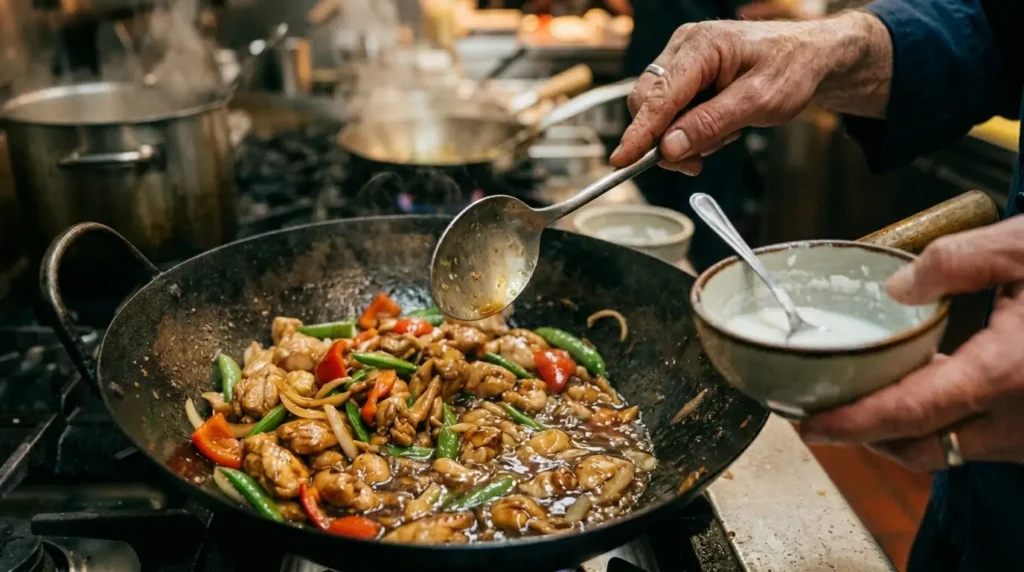
Pick the Right Thickener: A Quick Decision Guide
Think before you pick up anything!
1. Do you need the sauce to be clear or opaque?
Arrowroot or tapioca are required for clear sauces. Creamy sauces that are opaque should use a roux or potato starch.
2. For how long is the sauce to cook?
Short cooking time? These two types of starch are effective. Long simmer? Serve with a roux or reduction. If unboiled, arrowroot will disintegrate if boiled for too long.
3. Any dietary rules?
- Arrowroot, tapioca, potato starch or veggie purée are the gluten-free options.
- Reduction, egg yolk liaison, or cauliflower purée are the three options for keto or low-carb.
- Paleo or Whole30: Arrowroot, tapioca, veggie purée.
Once you answer those three questions, how your choice narrows quickly.
Also Read: How to Season a Cast Iron Skillet for Cooking 2026
8 Ways to Thicken Sauce Without Cornstarch
1. Flour Roux
A roux is a mixture of the same parts of fat and flour cooked together first and then liquid added. The main ingredient of French sauces is this. I utilize it for gravies, cheesy sauce, and anything creamy.
The ingredients needed: 2 tablespoons of butter and 2 tablespoons of all-purpose flour and 1 cup of liquid.
How to do it:
In a pan, melt the butter over medium heat. Add the flour and beat together. Keep stirring. Cook for 1 minute for white sauce. To add more flavor to the blond roux, cook 3 to 4 minutes until the roux becomes nutty. Add warm milk/Stock slowly, whisking. Never dump all at once, otherwise it will have lumps. Simmer until the back of a spoon is coated, 3–5 minutes.
Gluten-free version: Use sweet rice flour or 1:1 gluten-free flour blend. Cook for one minute more until you can’t taste the raw flavor.
Be careful, if the roux is not cooked enough it will have the taste of flour. Give it time.
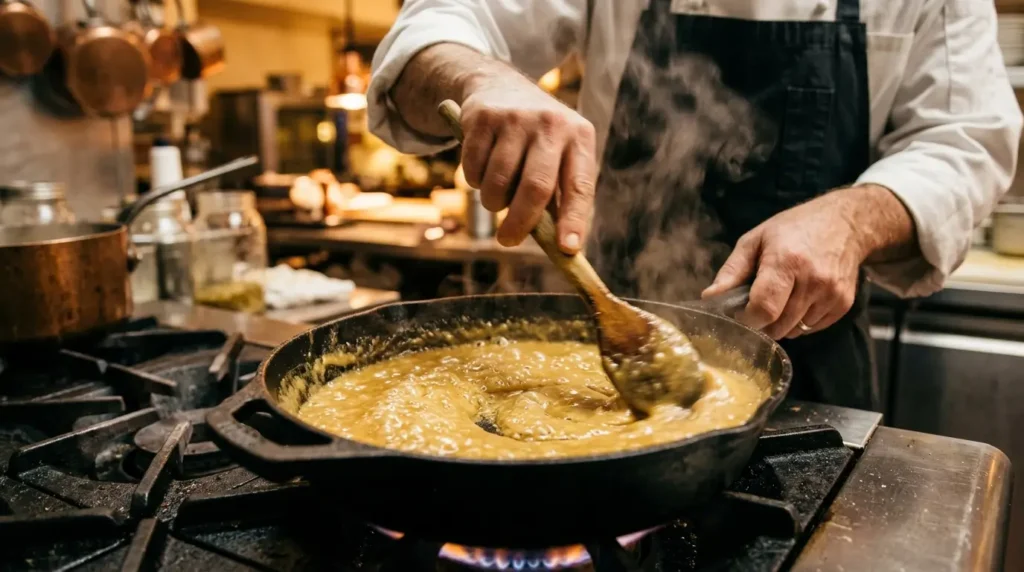
2. Arrowroot Powder
For any product that requires to stay crystal clear I would go with my arrowroot. It is of tropical origin from a tuber known as Maranta arundinacea. Mixes with no cloudiness and thickens at a lower temperature than cornstarch.
Ingredients: 1 tablespoon arrowroot powder, 2 tablespoons of cold water.
How to do it:
In a small bowl combine arrowroot with cold water and form a slurry. Avoid pouring dry powder into hot water. Simmer until the sauce begins to boil. Stir in the slurry. Cook 30 to 60 seconds. The liquid becomes clear and shiny. Remove from the heat right away.
The important rule to remember is that you should never boil arrowroot. It does not have a long shelf life in terms of thickening at high heat. Include it solely at the end.
Taste and texture: Totally bland. No starchy mouthfeel. The sauce is light.
Ideal for: Stir-fry sauces, fruit coulis, clear soups and pan glazes.
3. Tapioca Flour
Cassava root is used to make tapioca flour. Provides a glossy, yet slightly stretchy finish. It is freeze-thaw stable, and that’s the great benefit. Tapioca thickened sauces do not become spongy when placed in the freezer.
Ingredients: 1½ teaspoons of tapioca flour to every cup of liquid and cold water to make a slurry.
How to do it:
Make a slurry with cold water. Add to a hot dish that’s simmering. Heat gently. As the sauce thickens, it becomes clear instead of opaque. When it covers the spatula, remove the spatula from the mixture and stop stirring. Tapioca sauces may be stringy if they are over stirred.
Use in: Pie filling, sweet and sour sauces, dairy free puddings, meal prep sauces for freeze.
Price note: Costs about $3 – $6/lb in most countries.
4. Potato Starch
The light velvety body obtained from potato starch. Not same as potato flour. Potato flour is a heavy tasting potato. Potato starch is purged of starch and neutral.
You’ll need: 1 tablespoon potato starch, 2 tablespoons cold water.
How to do it:
Make the slurry. Turn off heat and set sauce aside. Add slurry quickly, whisking well. Bring back to low heat and cook for 30 seconds. It quickly thickens up.
Note: Do not put potato starch in the fire! Add to heat off the grill, heat slowly.
Buy at: European-style delis or kosher food departments, well-stocked grocery baking aisles. In North America, Manischewitz is a popular variety. Approximate price $2–$5/lb.
5. Beurre Manié
In French, “beurre manié” translates to “kneaded butter.” It is a combination of softened butter and flour, mashing them together in equal portions. It’s like an uncooked roux and you add it at the end.
I’ve got a little stashed in the freezer in case of emergency. If a stew or braise is lacking in depth just before serving, simply add beurre manié and it’s ready to serve in minutes.
The ingredients required are: softened butter – 1 tablespoon, flour – 1 tablespoon.
How to do it:
With a fork, combine butter and flour into a smooth paste. Take small cuts with a knife. Stir them into a saucy dish or stew that is just simmering. Cook the flour for 3–4 minutes. The sauce becomes thicker and becomes shiny and buttery.
Ideal for: Quickly making a stew, pan sauce or braise.
6. Reduction
Reduction does not require any kind of starch. The liquid is boiled until it thickens up to a sauce. Pure flavor. Nothing added.
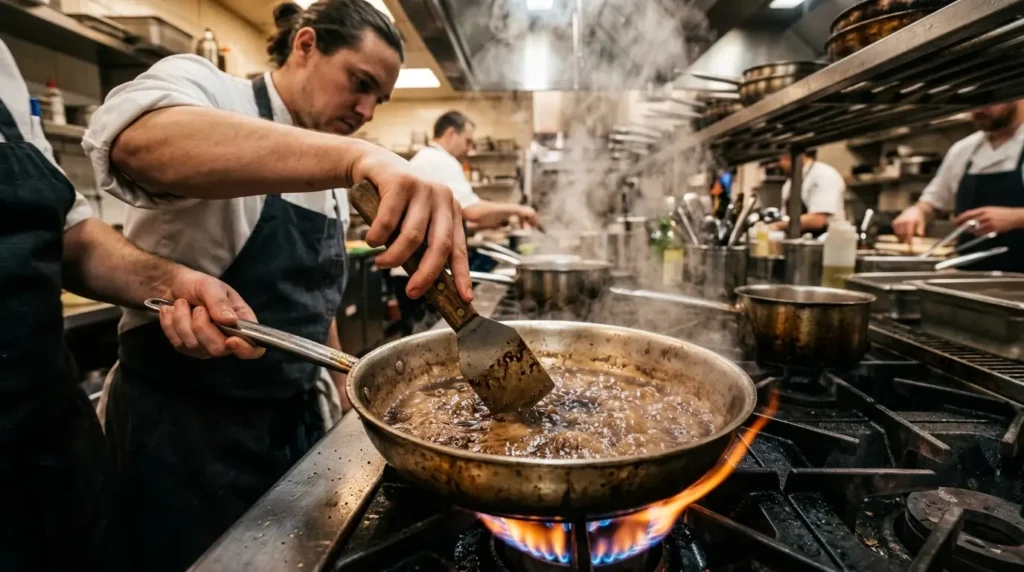
It is a practice done by restaurant chefs all the time. Once meat is seared, they add wine or stock to the pan, scrape up any browned-on edges of the meat and simmer until the liquid is syrupy.
Requirements: Large pot, water and time.
How to do it:
Add wine, stock or juice to hot cooked meat. Scrape the bottom to get the fond (browned bits). Heat to a brisk boil. Allow it to simmer until it is half or more. Pull it out of the spoon. This is to be mounted with a cold pat of butter off-heat for additional body and shine.
Great for: Wine sauces, balsamic glazes, pan sauces with roast, etc.
The downside is that it is a time-consuming process. It may not be possible to simmer for 15 minutes on a busy weeknight. But the tastes repaid are unparalleled.
7. Egg Yolk Liaison
A liaison is a mixture of egg yolks with cream, added to a sauce to thicken it and make it more flavorful without overpowering it. It has a silky and luxurious feel. It is not possible to boil the sauce after adding it or the eggs will scramble.
Ingredients: 2 egg yolks and 3 tablespoons heavy cream.
How to do it:
Beat the cream and yolks together in a whisk. Slowly dribble that hot sauce in on the yolk mixture, whisking constantly. This is to temper the eggs and causes them to become warm without cooking. Return the tempered mixture to pot. Heat slowly, stirring until coated with sauce and reaches 175°F (80°C). Don’t heat above this temperature.
Safety note: DO NOT exceed the boiling point. Use an instant-read thermometer to help.
Ideal for: Cream soups, velouté sauces, classic French style dishes.
8. Puréed Vegetables or Legumes
Smooth pureed root vegetables, white beans, or cauliflower with added water for sauces can be used. This approach also gives nutrients and can be used by those who do not consume any refined starches.
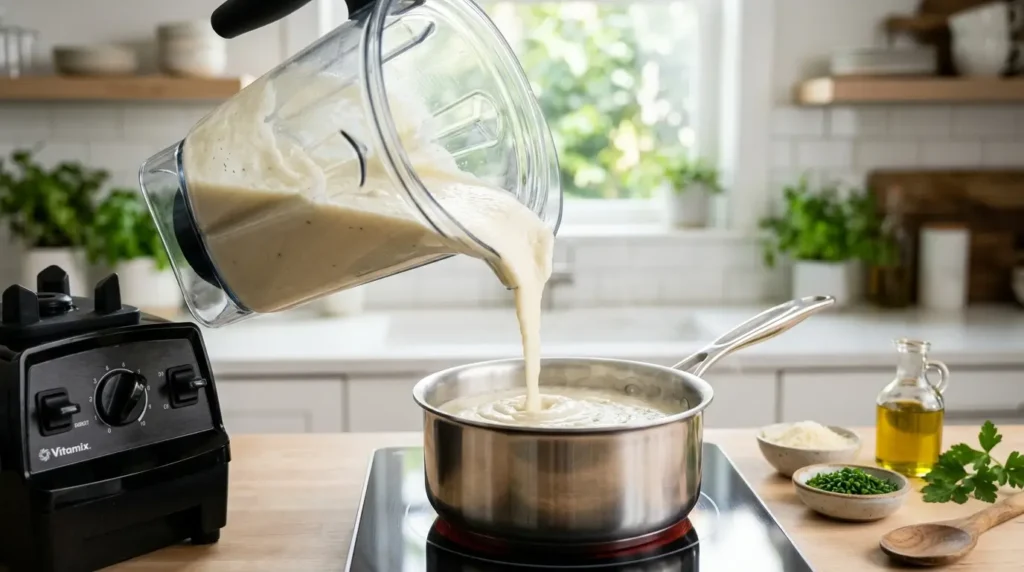
This is a trick I found when I was creating a dairy-free alfredo. Cauliflower purée was used to add creaminess to its body, fooling my guests.
Ingredients: 1 cup of steamed cauliflower florets or potatoes or canned cannellini beans.
How to do it:
Cook until very tender, either by steaming or boiling. Puree with a little of the cooking liquid until smooth. Add to the sauce and mix. Heat through. Adjust seasoning. The sauce is richer and thicker without any starch.
Best uses: Dairy-free cream sauces, vegan cheese sauces, sneaking veggies into child’s meals.
Price: Cauliflower sells for $2 to $3 per head. Canned beans are very inexpensive in the pantry.
Quick Thickener Comparison
Thickener properties by use:
| Thickener | Best For |
|---|---|
| Flour Roux | Gravies, cheese sauces |
| Arrowroot | Clear glazes and fruit sauces |
| Tapioca Flour | Pie filling, freeze-thaw sauces |
| Potato Starch | Light pan sauces, soups |
| Beurre Manié | Last-minute stews |
| Reduction | Wine sauces, jus |
| Egg Liaison | Cream soups, velouté |
| Veggie Purée | Vegan cheese sauces, curries |
Sauce-Type Matchmaker
| Sauce Type | Best Pick |
|---|---|
| Meat sauce (pan) | Reduction or beurre manié |
| Cheese sauce | Flour roux |
| Sautéing sauce | Arrowroot |
| Dairy-free alfredo | Cauliflower purée + tapioca |
| Gravy for roast | Roux from drippings |
| Fruit purée | Chocolate sauce or caramel |
| Custard sauce | Egg liaison |
Common Mistakes That Ruin Sauces
Making of dry starch additions to hot liquid.
Fix: Always make a slurry using cold water first. Otherwise, lumps appear immediately.
Boiling arrowroot or potato starch to use.
Fix: Add these to the end, heat up gently and serve immediately.
Not proper cooking of roux.
Fix: Allow at least 2 – 3 minutes for this. Raw flour has the flavor of uncooked dough.
After adding the egg liaison, boil.
Correct: Use a thermometer. Turn off heat at 175°F, stirring all the time.
Excessive use of thickener.
To solve: Use less. There is no limit to adding more. Reduce a thick sauce by adding more stock and/or water and re-seasoning.
Not tasting after adding thickener.
Fix: Starches tend to dull down the flavour a little, so some are to be fixed. Always season and salt at the end.
Where to Buy Specialty Starches
Arrowroot powder can be found in the gluten-free section of most supermarkets. However, you can save money at Asian grocery stores, Caribbean stores and health food shops. Use a search engine that states “Asian grocery near me” or “health food store near me” on a mobile device.
Tapioca flour is a common ingredient in the cooking of Brazil and Southeast Asian countries. It is sold in Latin markets. The food hall in major cities have several brands available for international customers.
Potato starch is found in European delis and kosher sections. In North American, it’s a key item in many grocery stores during Passover.
Bob’s Red Mill and Anthony’s ship worldwide using online. Bulk pricing does apply to restaurants. Arrowroot will cost $4–8/pound, tapioca $3–6/pound, and potato starch $2–5/pound.
Farmers markets offer cauliflower and root vegetables to be purchased at a lower price than supermarkets when in season for vegetable thickeners.
Frequently Asked Questions
May I substitute regular flour for cornstarch?
Yes. Cook first with butter to make a roux. People don’t like the taste of raw flour in sauces. A cooked roux produces a creamy, opaque sauce that will stand up to heat.
Is arrowroot better than cornstarch?
This will depend on the dish. Arrowroot remains stable and effective in colder temperatures. Cornstarch will cook longer without getting too mushy. When it comes to clear glazes, arrowroot is the clear winner. Cornstarch will stand up better to simmering gravy.
How much arrowroot equals cornstarch?
Mix 2 teaspoons of the arrowroot for each 1 tablespoon of the cornstarch. By volume, arrowroot is more effective at thickening.
Why did my arrowroot sauce get watery again?
You boiled it. Under high heat, arrowroot will decompose. Put it as a last ingredient and serve right away.
Can I freeze sauces thickened with arrowroot?
No. Arrowroot will become mushy if frozen and thawed. Use tapioca flour in freezer bound sauces.
What thickener is best for cream-based sauces?
A flour roux. It provides a creamy and firm foundation that won’t separate with cheese and milk products.
What is a keto-friendly thickener?
Reduction adds none of the carbs and focuses flavor. Egg yolk liaison is a rich dressing that is low in carbohydrates. Cauliflower can be pureed to use in cream sauces. Do not use arrowroot or tapioca with keto.
Can I thicken a cold sauce?
The arrowroot and tapioca variety begin to act when the temperature is low. Make slurry and stir in cold sauce and gently heat until clear. Use a vegetable purée for no cook sauces.
Is potato starch the same as potato flour?
No. Potato starch is pure and non-acidic. Potato flour is whole ground potato, is potato flavor and gives sauces a heavy, potato-like texture. Do not swap them.
Do professional chefs use cornstarch?
Some do, primarily for quick pan sauces. Other people like to use reduction or roux or liaison for better flavour and texture control. Arrowroot is the sole grain being used to meet gluten-free demand for kitchens.
Leave a Reply